
For a professional landscaper, the most expensive fixture isn't the one with the highest price tag—it's the "cheap" one you have to replace for free six months later. When evaluating the best landscape lighting brands, the market is often dominated by two retail giants: Malibu and Hampton Bay. However, for contractors and serious DIYers, the choice isn't just about brand loyalty; it's about material science and electrical architecture.
What are the best landscape lighting brands?
While Hampton Bay (Home Depot) and Malibu (Legacy/Aftermarket) are the most recognizable entry-level brands, the "best" lighting for professional application is defined by housing durability (Cast Aluminum or Brass), IP65+ Ingress Protection, and component serviceability. For strictly residential DIY, Hampton Bay offers accessibility. However, for long-term reliability without trenching, premium specification brands like Lumimuse offer professional-grade solar variants that outperform legacy low-voltage kits.
This analysis moves beyond the "Big Box" shelf to compare build quality, connector reliability, and the "Cost of Quality" metric that every installer must calculate.
II. Material Science: Housing and Weatherproofing
Die-Cast Aluminum is a non-ferrous metal alloy used in professional lighting fixtures to provide superior thermal conductivity and corrosion resistance compared to plastic composites.
The primary failure point for entry-level lighting is the housing material. Malibu Lighting, historically a market leader, suffered significant quality declines prior to its bankruptcy in 2017. Most "Malibu" branded products found today are legacy inventory or lower-tier aftermarket replacements often constructed from ABS plastic. In direct sunlight, plastic housings degrade, become brittle, and eventually crack, allowing moisture to destroy the internal LED driver.
Hampton Bay has shifted much of its inventory to aluminum, but often utilizes a thinner gauge metal that is prone to oxidation if the powder coating is scratched.
The Ingress Protection (IP) Factor
Professional landscapers prioritize the IP Rating (Ingress Protection). A standard big-box fixture often carries an IP44 rating, meaning it is protected against splashing water but not sustained jets or heavy storms. For true longevity, an IP65 rating is the minimum requirement, ensuring the fixture is "dust tight" and protected against water jets from any angle.

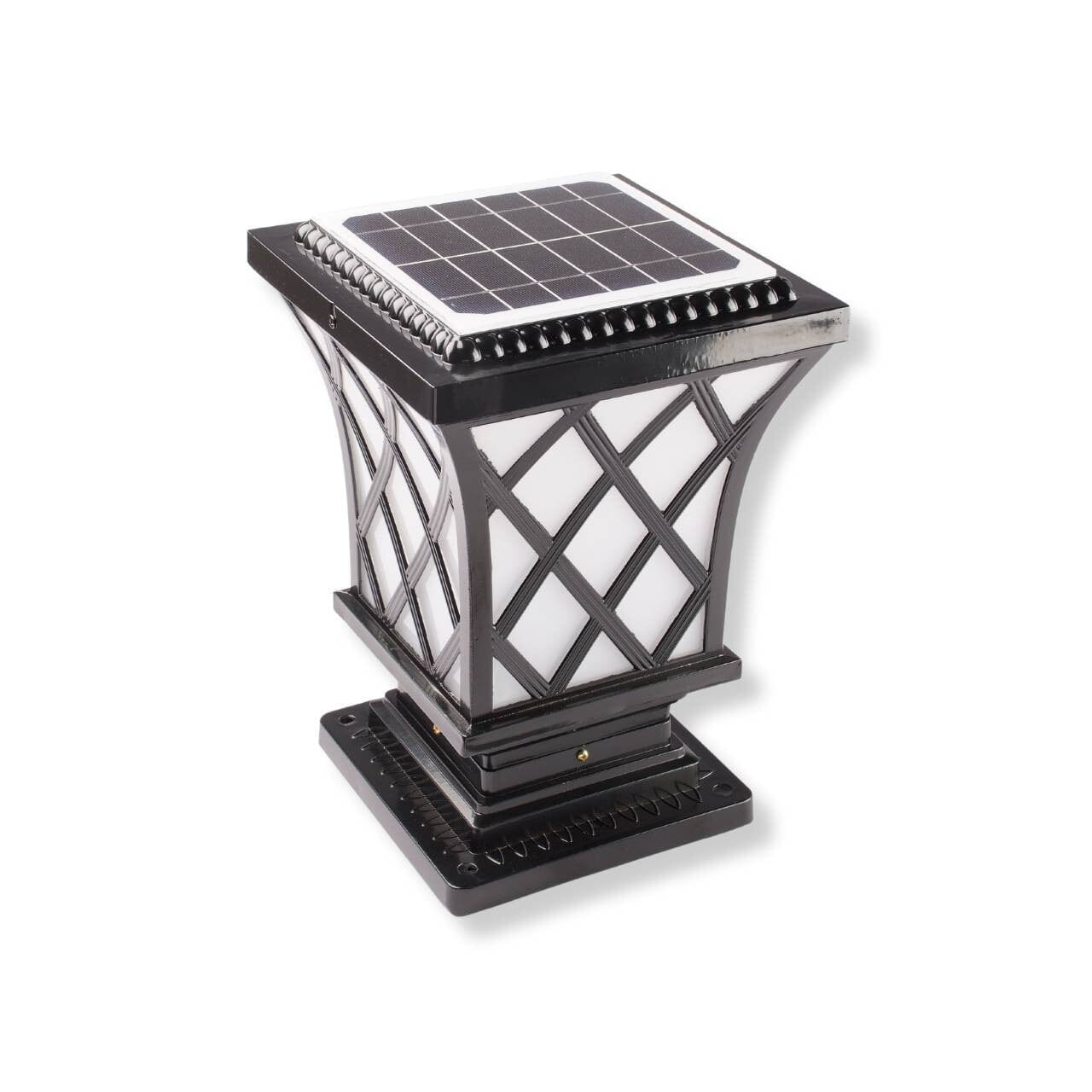
Unlike the plastic stakes common in Malibu kits, premium alternatives like the Lumimuse Solar Premium Pillar Light utilize Cast Aluminum construction. This material choice acts as an effective heat sink, pulling thermal energy away from the LED chip to extend its lifespan, a critical feature often missing in budget brands.
III. Electrical Architecture: Connectivity and Voltage
Voltage Drop is the decrease in electrical potential along the path of a current flowing in an electrical circuit, a common issue in low-voltage landscape lighting systems utilizing thin-gauge wire.
The Connector Reliability Crisis
Both Hampton Bay and Malibu popularized the "Quick-Connect" clip system. While these clips allow for fast DIY installation by piercing the main line without tools, they are the number one cause of system failure. Over time, soil movement and moisture corrode the copper contact points, leading to flickering lights.
Professional installers avoid these clips entirely, opting instead for grease-filled wire nuts or heat-shrink crimps. However, this increases labor time significantly.
Data Comparison: Entry-Level vs. Professional Grade
The table below compares the technical architecture of common retail brands against professional standards and premium solar alternatives.
| Attribute | Malibu (Legacy) | Hampton Bay | Lumimuse (Premium Solar) | Pro Grade (e.g., VOLT) |
|---|---|---|---|---|
| Housing Material | ABS Plastic / Thin Metal | Aluminum Alloy | Cast Aluminum | Solid Brass / Copper |
| Power Source | 12V Transformer / Basic Solar | 12V Transformer | 6W Monocrystalline Solar | 12V-15V Transformer |
| Connection Type | Piercing Clip (High Fail Rate) | Quick-Connect Clip | Zero Wiring (Integrated) | Hardwire / Heat Shrink |
| Color Temp (Kelvin) | Fixed (Often Cool White) | Selectable (Newer Models) | 3-in-1 Switch (3000K-6000K) | Fixed Bulb (User Choice) |
| Battery Chemistry | NiCd / NiMh (Short Life) | N/A (Usually Wired) | LiFePO4 (Lithium Iron) | N/A (Wired) |
IV. The Landscaper’s Dilemma: Profitability vs. Reliability
The Truck Roll is a logistics metric referring to the dispatch of a technician to a site for repairs, the cost of which often exceeds the profit margin of installing budget-grade fixtures.
When a client requests "Malibu lights" because they recognize the name, they are usually focused on the initial hardware cost. However, the professional installer must educate the client on the Lifecycle Cost.
- ⚠️ Red Flags for Professional Installers:
- ✅ Non-Replaceable LEDs: If a chip fails in a cheap fixture, the entire unit is trash.
- ✅ Plastic Ground Stakes: These snap easily in frozen or clay-heavy soil.
- ✅ Low Lumen Output: Budget solar lights typically produce 5-10 lumens, serving as "markers" rather than illumination. (Contrast this with the 324 Lumens of the Lumimuse Premium Pillar).

For areas where trenching wire is impossible (e.g., established hardscapes), professionals are increasingly turning to high-output solar. The Lumimuse Pillar Light eliminates the "Truck Roll" risk associated with cut wires or failed transformers, while its LiFePO4 battery ensures reliability that standard NiCd solar batteries cannot match.
V. Future-Proofing: Smart Integration and LEDs
Color Temperature is a characteristic of visible light measuring the warmth or coolness of the light source, expressed in Kelvin (K), ranging from warm (3000K) to cool daylight (6000K).
A major frustration with brands like Malibu was the inability to match light colors. You might buy five lights, and three would look yellow while two looked blue. Hampton Bay has addressed this with Hubspace technology, allowing for some control, but it requires a reliable Wi-Fi signal to the transformer—a rarity in large backyards.
📺 Related Video: Solar Premium Pillar Light - Bronze or Black - 3 in 1 3000K vs 6000K color test
The Lumimuse Premium Pillar Light solves the consistency issue with a physical 3-in-1 switch on the fixture itself. This allows the user to manually select:
- 3000K (Warm White): Ideal for architectural warmth and mimicking halogen.
- 4500K (Daylight): Best for high-contrast security lighting.
- 6000K (Cool White): Suitable for modern, crisp aesthetics.

VI. Conclusion
While Malibu and Hampton Bay served as the gateway for millions of homeowners to enter the world of landscape lighting, they remain "short-cycle" solutions. For the professional installer or the discerning homeowner, the math implies that investing in Cast Aluminum and IP65-rated fixtures pays for itself by eliminating maintenance costs.
If you require the power of a hardwired system but the flexibility of a wireless install, consider upgrading to the Lumimuse Solar Premium Pillar Light. With its 25-year solar panel life and robust metal housing, it offers the "Pro-Grade" reliability that big-box plastic simply cannot deliver.
Ready to Upgrade Your Landscape?
Don't let poor wiring or cheap plastic ruin your curb appeal. Explore our guide on Solar LED Street Lights or shop the Premium Pillar Light Collection today.