
1. Introduction: The Cost of a Cheap Can
For a custom builder or electrical contractor, the "price" of a recessed light isn't what you pay at the supply house. The real cost is the callback.
It’s the text message from a client at 9 PM complaining that their kitchen lights flicker when the dishwasher runs. It’s the electrician spending three extra hours wrestling with bent nail bars during rough-in. It’s the "glare bomb" effect that makes a $50,000 kitchen renovation look like a hospital waiting room.
In the residential market, two titans dominate the ceiling: Halo (Cooper Lighting Solutions) and Juno (Acuity Brands). While they often sit side-by-side on the spec sheet, they serve two very different masters when considering Halo vs Juno recessed lighting.
The Professional Verdict (2026)
- Choose Halo (Cooper) if your priority is Velocity and Availability. It is the "Volume King"—easiest to source, fastest to rough-in, and offers the most forgiving dimming compatibility for standard builds.
- Choose Juno (Acuity) if your priority is Optic Quality and Precision. Juno fixtures generally feature deeper baffles (better glare control/cutoff), tighter LED color consistency, and more rigid housings, making them the standard for high-end custom homes where the "Quiet Ceiling" aesthetic is required.
2. The Rough-In Reality: Housing Construction & Velocity
The battle is often won before the drywall even goes up. The physical construction of the "can" (housing) determines the speed of the rough-in and the flatness of the ceiling.

Housing Rigidity: The Metal Gauge War
- Halo (H750 Series): Halo housings are engineered for speed. They are lighter, which makes them easy to manipulate, but they can be prone to deformation. If an apprentice hammers a nail bar too aggressively, the can may go "out of round," making trim installation a nightmare later.
- Juno (IC22/IC23 Series): Juno housings are famous for their rigidity. They use a slightly heavier gauge steel. You can drop a Juno housing, and it will likely stay round. This structural integrity ensures that the trim sits flush against the drywall every single time, reducing the "gap" callbacks that drive painters crazy.
The Mounting Mechanism: Got Nail vs. Real Nail
- Halo’s "Got Nail!" System: This is widely considered the fastest installation system on the market. The pre-installed nail clips allow an electrician to secure the housing between joists in seconds. It is forgiving and designed for the "blow-and-go" pace of production building.
- Juno’s "Real Nail 3" System: Juno focuses on precision. Their telescoping bars are more rigid, preventing the housing from sagging in the center of a wide joist bay. While it might take 15 seconds longer to install per unit, it guarantees the light remains perfectly centered and level years later.
Pro-Tip: The Junction Box (J-Box) Factor
Electrician Feedback: The volume of the Junction Box matters. Halo generally offers more "working room" inside the J-Box and utilizes "Quick Connect" push-in wire traps that speed up the daisy-chaining process (12/2 or 14/2 Romex). Juno J-Boxes can feel tighter, requiring neater wire management to close the lid properly.
3. The "Quiet Ceiling": Optics, Glare, and Light Quality
This is where the Information Gain separates the two brands. A light fixture's job is to illuminate the room, not to blind the occupant.
📺 Related Video: Halo vs Juno recessed lighting glare comparison
The "Cutoff" Angle (Glare Control)
- Halo (RL/LT Series): Halo’s standard retrofit trims often prioritize lumen output (brightness) over control. The light source (LED chip) sits closer to the surface of the lens. While this creates a bright room, it causes high glare. You can see the light source from across the room.
- Juno (Basics & Podz): Juno engineers for a "Deep Baffle" or "Regressed Optic." The LED source is pushed deeper into the housing. This creates a "Quiet Ceiling" effect—where the fixture looks "off" until you are almost directly underneath it, yet the room is fully illuminated. This is the hallmark of luxury lighting design.
Dimming Performance & Driver Reliability
Flicker is the enemy. Both brands use 120V phase-dimming drivers, but their tolerance varies.
- Halo: excellent compatibility with standard Lutron Diva/Maestro dimmers. They have a "soft" bottom end, usually dimming down to 5% without "pop-corn" effects (where lights turn off at different times).
- Juno: Newer Juno drivers are robust, but historically, they require a specific "ELV" (Electronic Low Voltage) dimmer to reach that "candlelight" 1% level without buzzing.
4. Feature Comparison: The Data
| Feature | Halo (RL56 Series) | Juno (Basics 6RLD) | LumiMuse (ZigBee) |
|---|---|---|---|
| Primary Use Case | Production / Renovation | Custom Home / Spec | Smart Home / Retrofit |
| Housing Required? | Yes (or Canless option) | Yes (or Podz option) | No (Ultra-thin) |
| Optic Cutoff | Moderate (High Efficiency) | Excellent (Deep Baffle) | Diffused (Wide Beam) |
| CRI (Color Quality) | 90 CRI | 90+ CRI | 90 CRI |
| Color Temp (CCT) | 5-Selectable Switch | 5-Selectable Switch | 16 Million (RGB+CCT) |
| Control Method | Wall Dimmer | Wall Dimmer | App / Voice / ZigBee |
| Dimming Range | 5% - 100% | 1% - 100% (w/ ELV) | 1% - 100% (Digital) |
| Approx. Price | $ (Budget Friendly) | $$ (Mid-Range) | $$ (Smart Value) |
5. The Smart Evolution: Moving Beyond the "Can"
While Halo and Juno fight the war of the "Housing," a third category is rapidly gaining market share in 2026: The Smart Wafer.
Traditional cans limit you to a single color temperature (set at installation) and require expensive wall dimmers. For clients requesting "Human Centric Lighting" (lights that change from cool white at noon to warm amber at night) or party-mode RGBs, standard cans fall short.
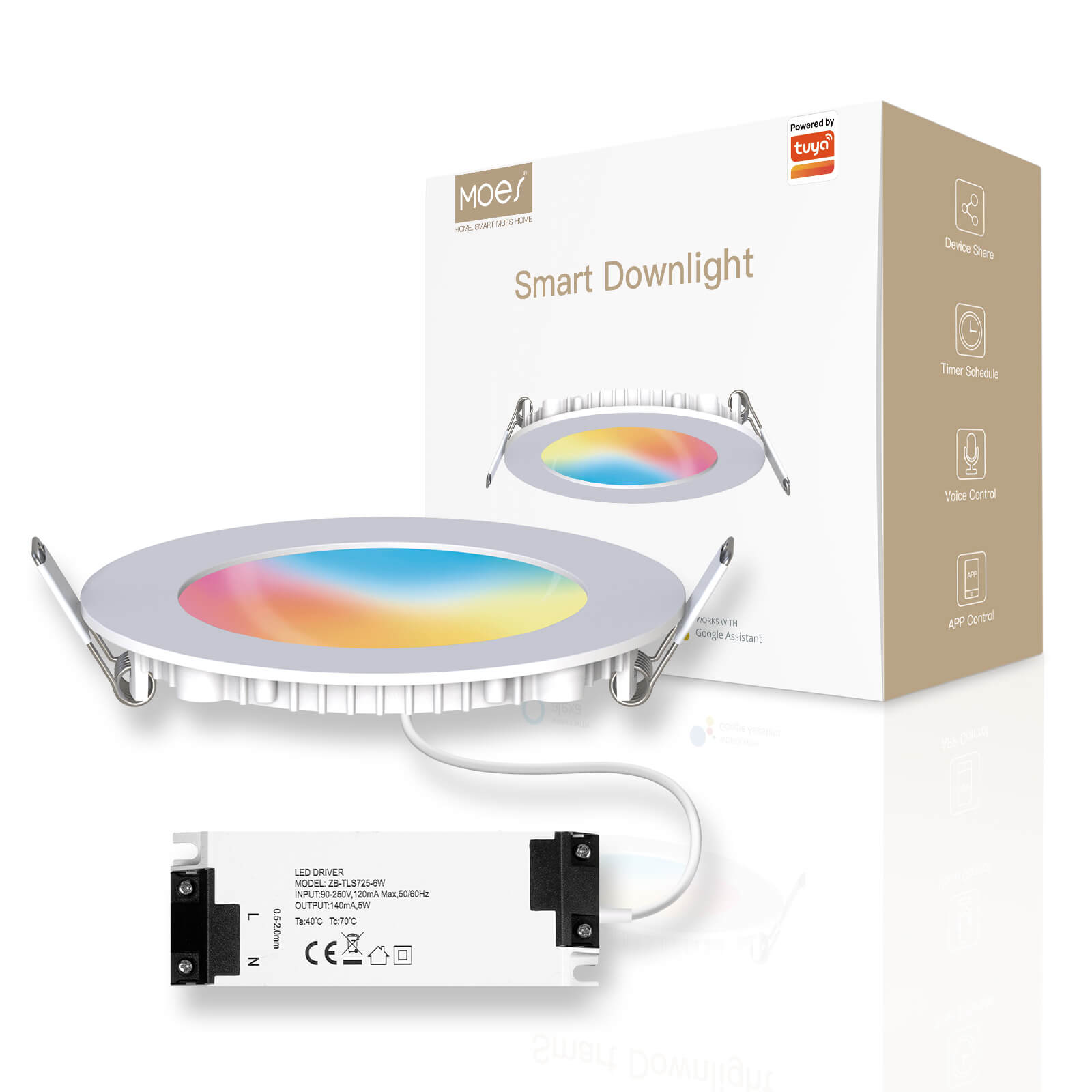
The Modern Alternative: LumiMuse ZigBee Downlight
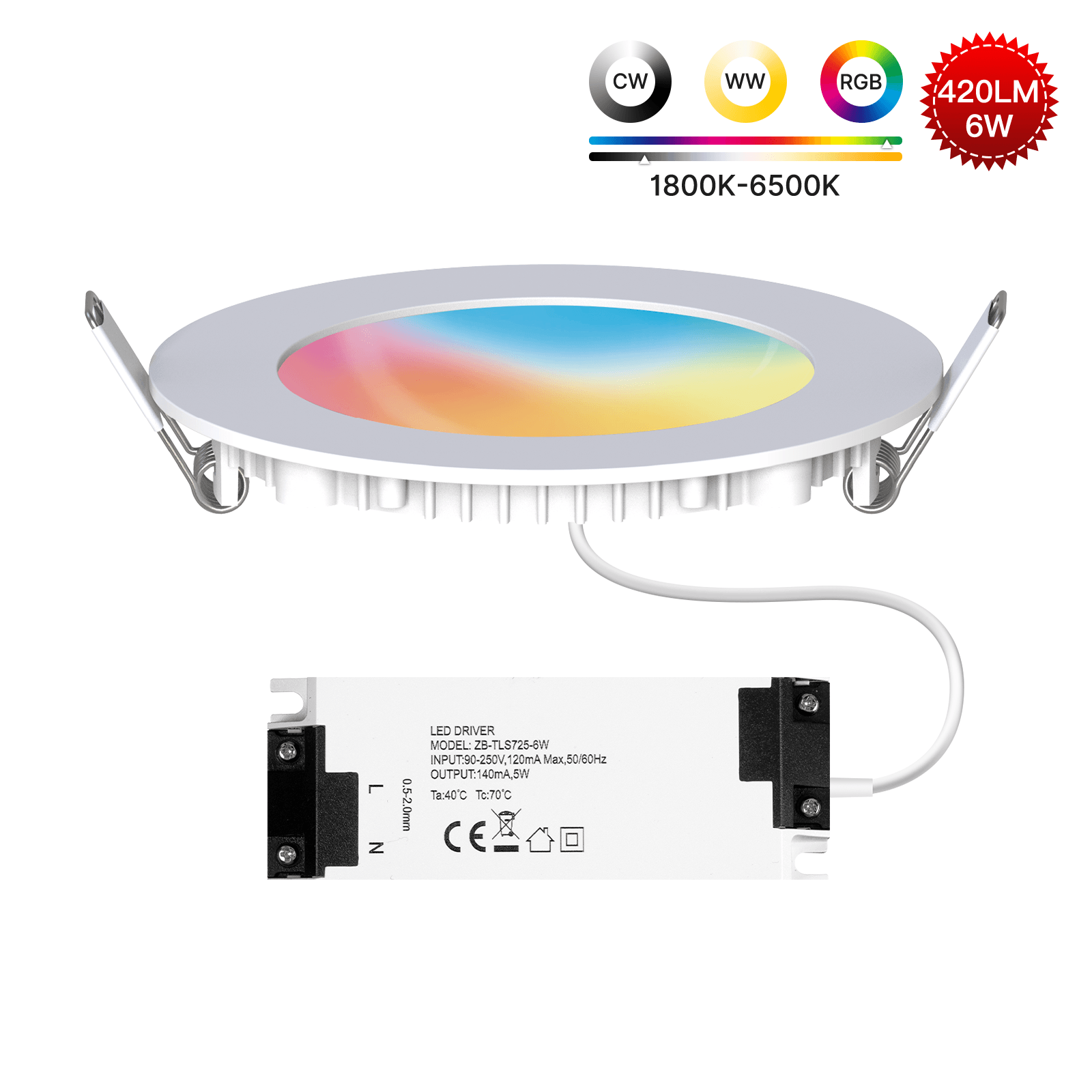
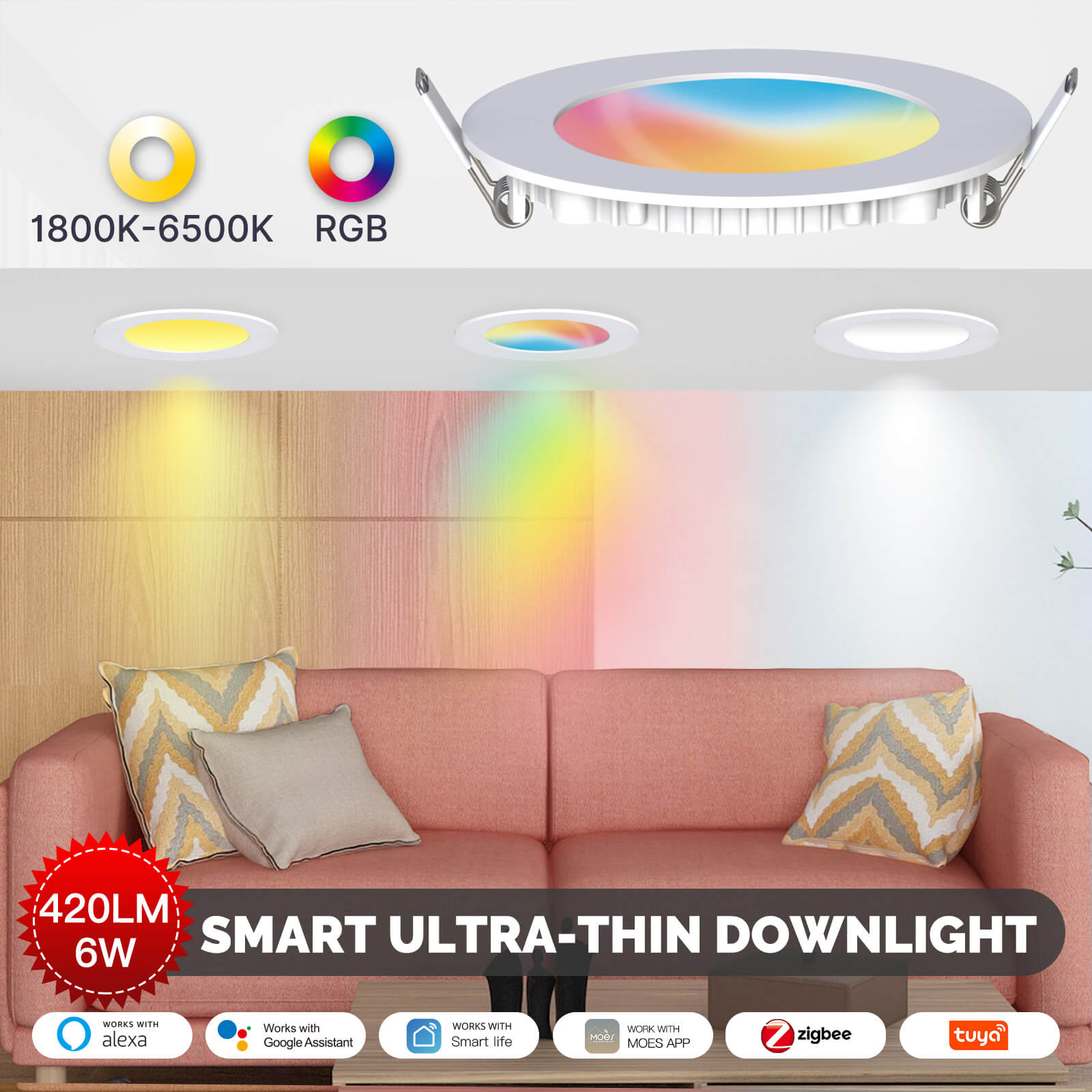
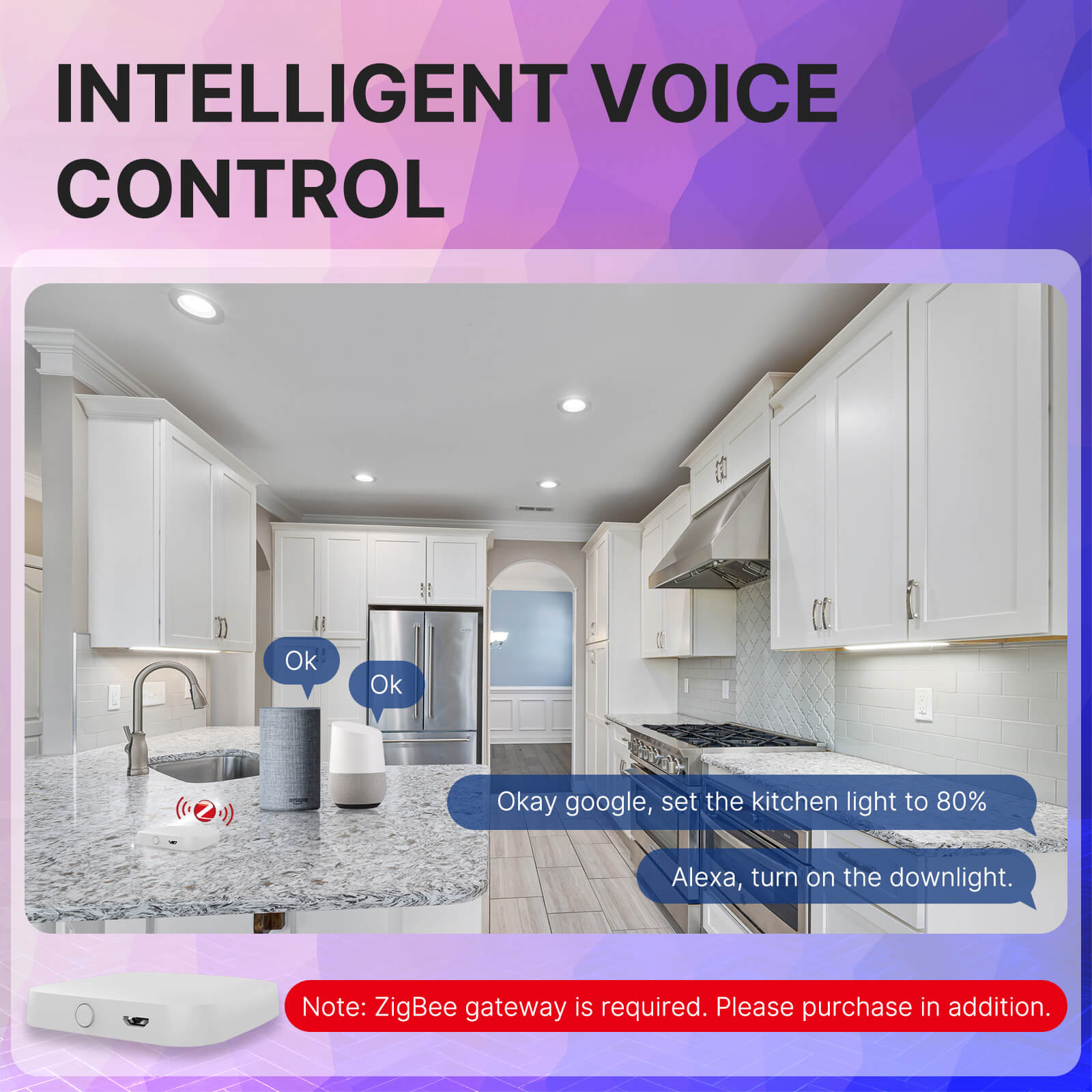
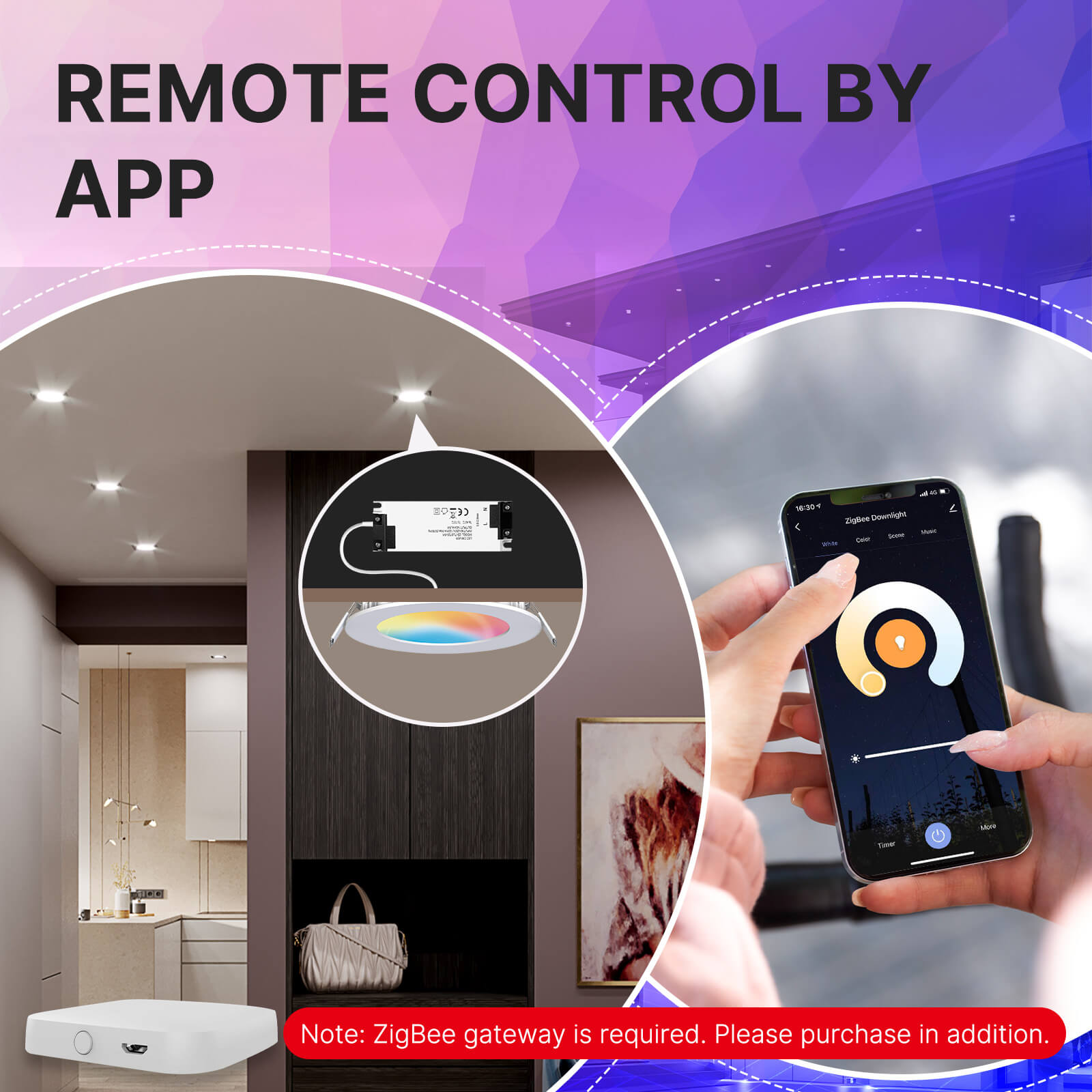
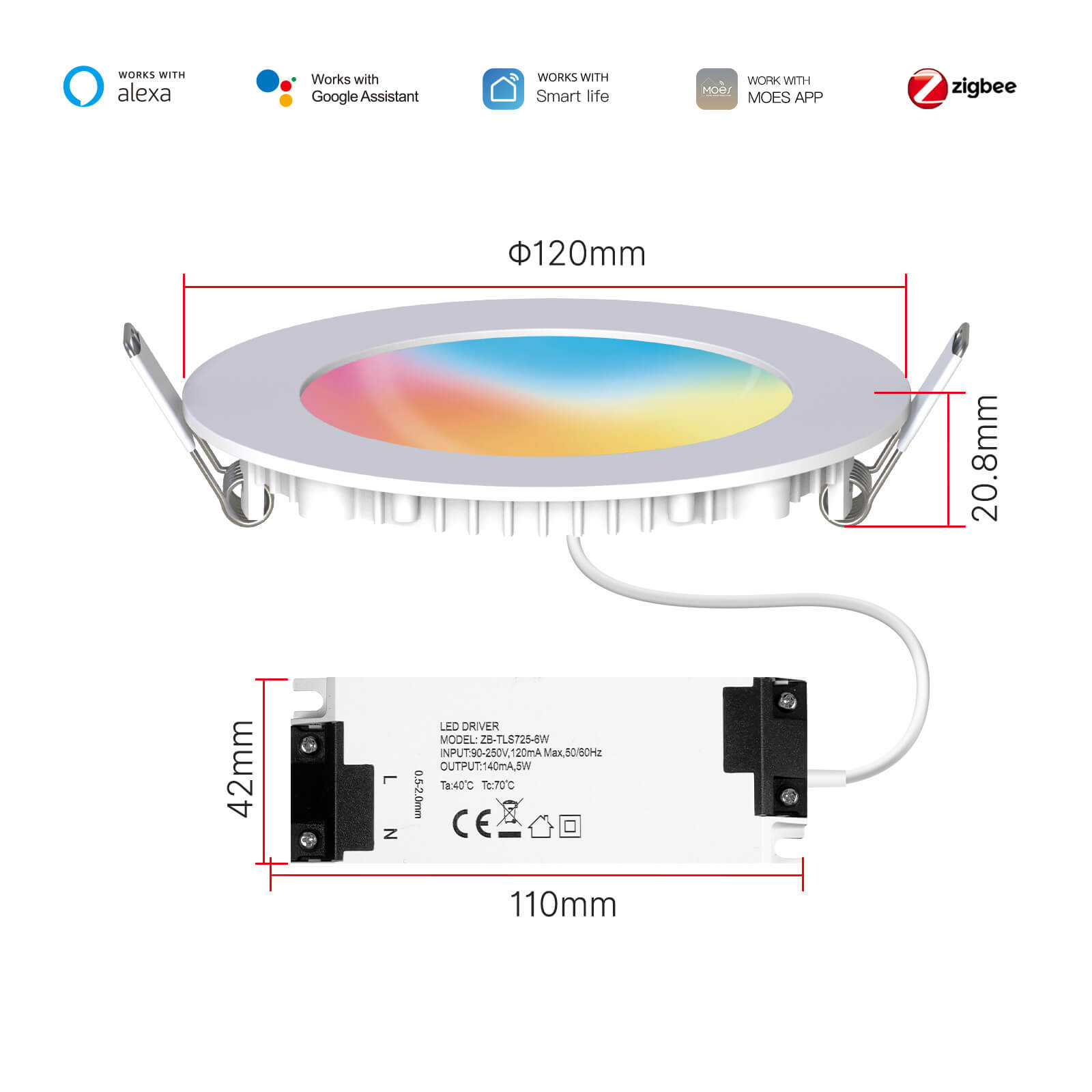
If your client wants the "Juno look" but demands modern smart home features without rewiring the entire house for a Lutron system, the LumiMuse ZigBee Downlight serves as the bridge.

- No Housing Needed: As an ultra-thin fixture, it eliminates the "Bent Nail Bar" headache entirely. It clips directly into the drywall.
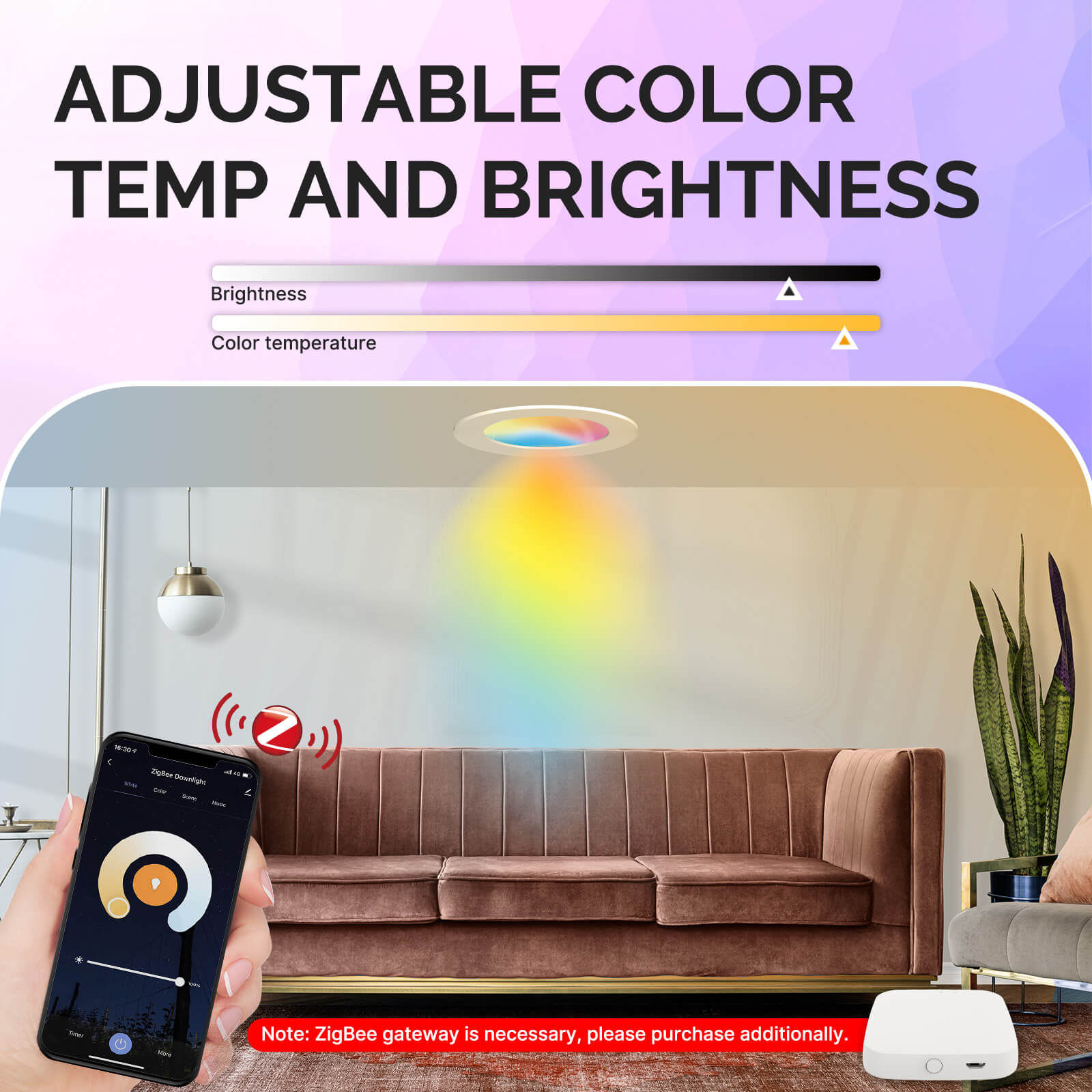
- Digital Dimming: Unlike Halo or Juno which rely on the voltage from a wall switch (causing flicker), LumiMuse dims digitally via the Tuya/ZigBee chip. This guarantees smooth 1% dimming every time.
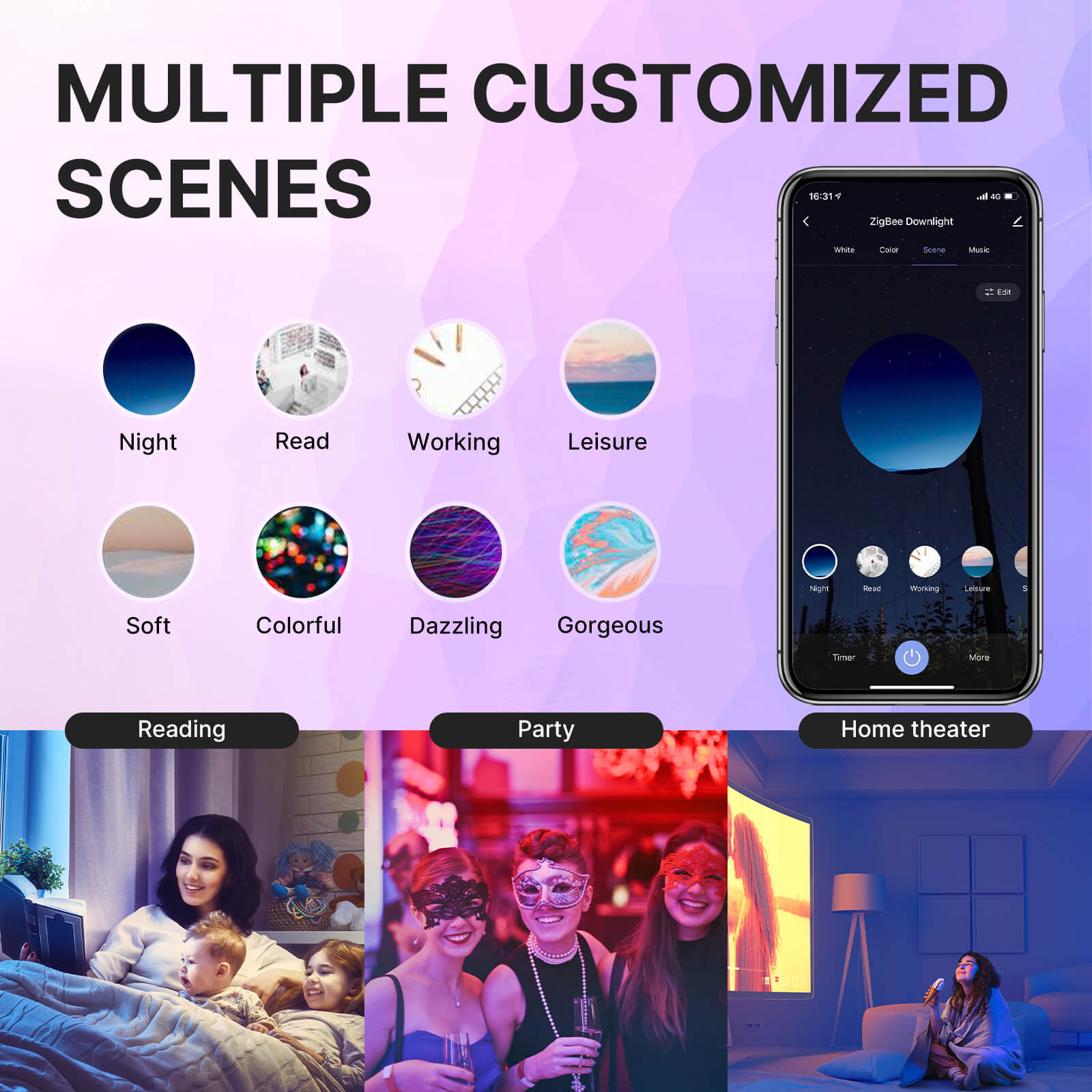
- Bio-Rhythmic Capability: You can program these lights to auto-adjust from 6500K (Daylight) for cleaning/cooking to 1800K (Candlelight) for evening relaxation—a feature that usually costs thousands in a traditional control system. This flexibility is a major evolution in LED Recessed Downlights Guide technology.
6. Strategic Recommendations
To maximize Information Gain and minimize callbacks, follow this specification guide:

-
For Secondary Bedrooms & Closets:
- Spec: Halo RL56.
- Why: It’s cost-effective, bright, and installs incredibly fast. The slightly higher glare is acceptable in these utility-focused spaces.
-
For Kitchens, Great Rooms, & Art Walls:
- Spec: Juno Podz or 6RLD.
- Why: The superior optic cutoff hides the light source. In a large open-concept room, you don't want the ceiling to look like Swiss cheese full of glowing dots.
-
For Media Rooms, Gaming Dens, & Retrofits:
- Spec: LumiMuse ZigBee Downlight.
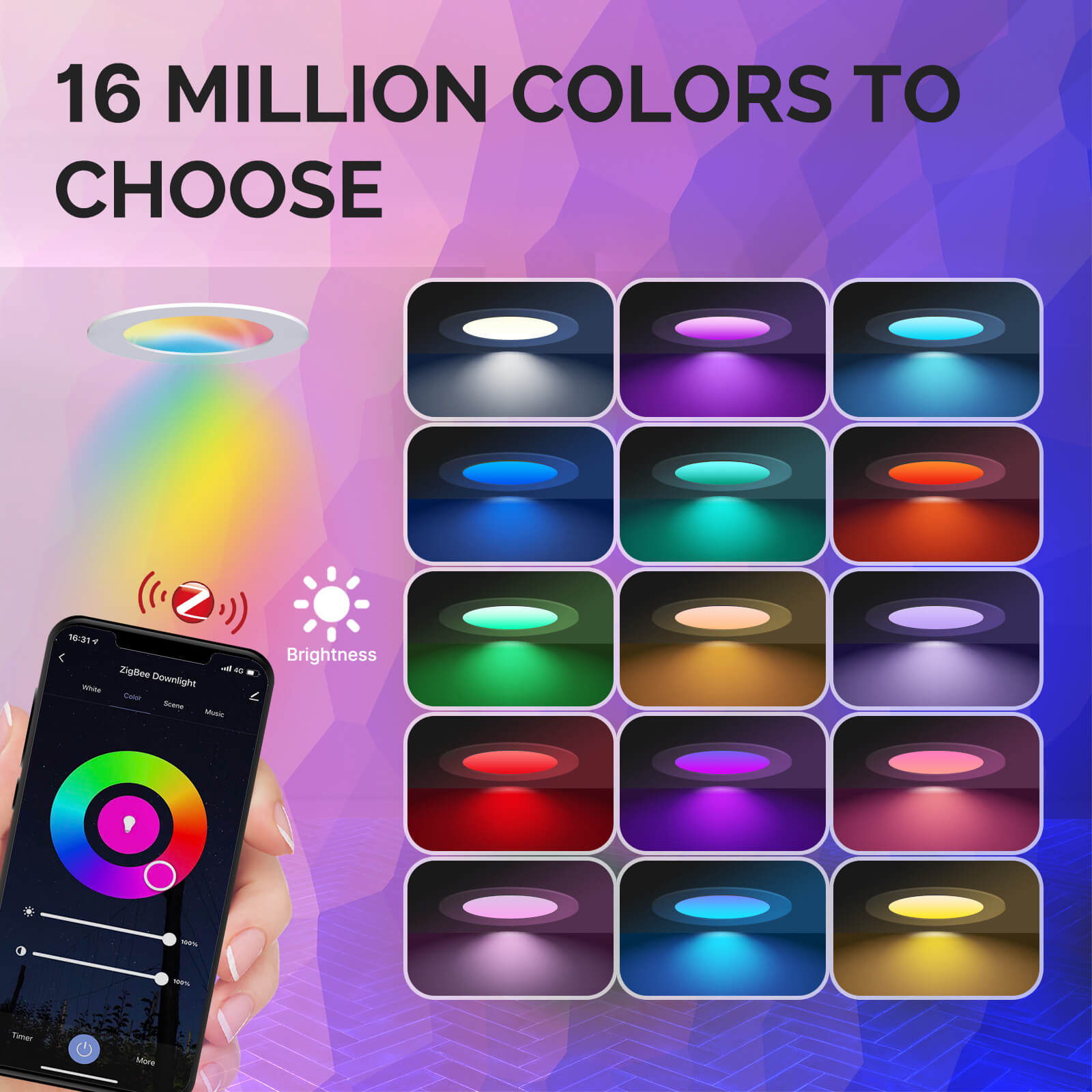
- Why: The RGB and Music Sync features add value that standard cans cannot match. Plus, the "Group Control" allows homeowners to zone their lighting (e.g., "Movie Mode") without installing a bank of 4 different dimmer switches.
Final "Callback" Calculation
- Halo: Low aesthetic risk, Low install risk. Safest bet.
- Juno: High aesthetic reward, Medium install skill required. Best for Portfolio.
- LumiMuse: High functional reward, Zero install risk (Canless). Best for "Wow" Factor.
Building a custom home or planning a major renovation? Don't let the lighting package be an afterthought. Whether you need the architectural precision of LED Recessed Downlights or the modern flexibility of smart wafers, choosing the right entity for your ceiling height and budget is critical.