
Are solar street lights worth it?
Yes, specifically for HOAs and commercial properties facing high trenching costs. However, value depends entirely on Battery Chemistry. While generic brands ($100-$200) often fail within 18 months due to poor heat tolerance, commercial-grade options like the Flybird 50W (using LiFePO4 technology) offer a 10+ year lifespan and significant ROI by eliminating electrical infrastructure costs.
1. The Economics of Infrastructure: Why HOAs Are Pivoting
The decision to switch to solar is rarely about "going green." It is about the cost of copper and concrete.
When an HOA board considers lighting a dark parking lot or mail kiosk, the primary expense is not the fixture. It is Trenching.
The Hidden Cost of "Wired" Light
Connecting a new light to the grid requires digging a trench 24 inches deep, laying conduit, pulling copper wire, and repaving the surface.
- Dirt Trenching: ~$12 per linear foot.
- Concrete/Asphalt Trenching: ~$30 - $45 per linear foot.
For a light pole located 300 feet from the nearest power source, the trenching alone costs over $9,000 before you buy the pole or pay the electrician.
The Solar ROI Calculation
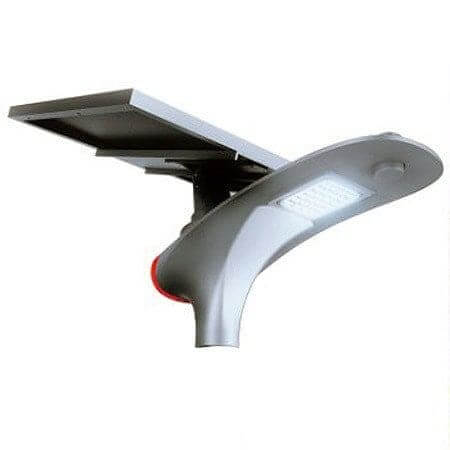
Commercial solar street lights, such as the Flybird 50 Watt, bypass this infrastructure entirely. The "Source of Power" is mounted on the pole.
| Cost Variable | Traditional Wired Street Light | Flybird 50W Solar Street Light |
|---|---|---|
| Fixture Cost | $400 - $800 | ~$300 - $500 |
| Trenching (300ft) | $3,600 - $12,000+ | $0.00 |
| Electrician Labor | $1,500+ (Grid Connection) | $0 (Bolt-on Installation) |
| Monthly Energy Bill | $15 - $25 / month | $0.00 |
| Total Year 1 Cost | $5,500 - $14,000+ | ~$500 |
2. Gama Sonic vs. Generic Brands: The "Engine" Matters
Not all solar lights are created equal. The market is flooded with "5000 Lumen" lights on Amazon that dim after two hours and fail after one winter.
The difference lies in the Entity Attributes: specifically Battery Chemistry and Panel Efficiency.

Attribute: Battery Chemistry (The Heart)
The battery is the failure point for 90% of solar lights.
- Generic Solar (Li-ion / NiMH): Most cheap lights use standard Lithium-Ion cells (similar to phone batteries). They degrade rapidly in heat (outdoor summer temps) and typically last 300-500 cycles (about 1.5 years).
-
Commercial Grade (LiFePO4): Premium units like the Flybird 50W use Lithium Iron Phosphate (LiFePO4). This chemistry is chemically stable, safe from thermal runaway, and rated for 2,000+ cycles (5-7 years minimum).
- Technical Note: LiFePO4 batteries maintain consistent voltage discharge, meaning the light stays bright rather than slowly dimming as the battery drains.
Attribute: Solar Panel Efficiency
Generic lights often use Polycrystalline panels (blue, shattered look) which suffer from low efficiency (13-15%). The Flybird utilizes a massive 28" x 26" Monocrystalline panel. This surface area is critical. A small panel cannot harvest enough photons in December to charge a battery fully. The Flybird’s oversized panel ensures autonomy even during cloudy days or shorter winter daylight hours.
3. The Aesthetic Review: Security vs. Glare
A common complaint in almost every solar street light review is the "Blue Light" effect.
The Kelvin Temperature Factor
Color Temperature (Kelvin) dictates how the light feels.
- Generic (6000K-7000K): Often described as "Prison Yard Blue." Cheap LEDs push this frequency because it appears brighter with less power, but it causes eye strain and washes out colors.
- Flybird 50W (6500K - Optimized): The Flybird also uses 6500K, but for a specific purpose: Commercial Security. In parking lots, gate entrances, and roadways, high-contrast cool white light improves security camera visibility and driver reaction times.
- Gama Sonic (2700K - 3000K): For residential walkways where ambiance is priority, brands like Gama Sonic (e.g., the Athena or Imperial series) offer a warm 2700K glow that mimics traditional gas lamps.
Strategic Advice: Use the Flybird 50W for the perimeter, parking lots, and gates. Use Gama Sonic for interior walkways and pool areas.
📺 Related Video: 3000k vs 6500k outdoor lighting comparison
Dark Sky Compliance
Light pollution irritates residents. High-quality fixtures use "Cutoff" optics to direct light downward onto the pavement, rather than scattering it horizontally into bedroom windows. The Flybird’s 120-degree beam angle is designed to cast a 60-foot diameter pool of light on the ground, minimizing upward light waste.
4. Product Spotlight: Flybird 50 Watt Solar Street Light
We use the Flybird 50 Watt as our baseline for "Commercial Grade" because it meets the necessary specs for HOA reliability.

Specs that Matter:
- Luminous Flux: 3000 Lumens (verified). This replaces a standard 200W incandescent or 70W Metal Halide bulb.
- Build Material: Heavy-duty aluminum alloy, not ABS plastic. Plastic housings crack under UV radiation after 2-3 years; Aluminum acts as a heat sink for the LEDs, extending their life.
- Control: Includes a remote with timer functions. This allows the HOA to set the light to "Motion Sensor Mode" or "Dusk-to-Dawn" depending on traffic needs.
Real-World Performance:
At a mounting height of 15 feet, the Flybird delivers 1,360 Lumens at ground level with a coverage diameter of 54 feet. This is sufficient to light a standard cul-de-sac intersection or a 4-car parking cluster with a single unit.
5. FAQ: Common Board Member Concerns

How long do the batteries actually last?
With LiFePO4 technology, expect 5 to 7 years of service before capacity drops noticeably. Replacements are simple "plug-and-play" modules, unlike the soldered batteries in cheap units.
Do they work in winter?
Yes, but placement is key. The panel must face South (in the Northern Hemisphere) and be free of shade. The Flybird’s oversized panel builds a "buffer" in the battery during the day to handle longer winter nights.
Are they vandal-proof?
The Flybird mounts at 12-20 feet and weighs 48 lbs. It is not easily tampered with. The construction is solid metal, protecting the internal components from rock throws or BB guns better than plastic alternatives.
6. Conclusion
Modern Solar LED Street Lights are no longer experimental. They are a fiduciary responsibility for HOAs facing infrastructure repairs.
If a board chooses a generic $150 light from Amazon, they will replace it in 14 months, having wasted labor and capital. If they invest in commercial-grade entities like the Flybird 50W or Gama Sonic line, they secure 10+ years of lighting for a fraction of the cost of trenching.
The Verdict:
- For Streets/Parking Lots: Flybird 50 Watt Solar Street Light (Best for Security/ROI).
- For Decorative Walkways: Athena Solar Street Light (Best for Aesthetics).
- For Budgets: Do not buy generic. The maintenance cost exceeds the savings.