1. Introduction: The "Grey Area" Liability Trap
For Architects and Electrical Engineers, few things are more frustrating than a final inspection failure caused by a semantic technicality. One of the most common red flags in 2026? The misclassification of exterior egress paths.
Specifically, the confusion regarding wet vs damp location lighting ratings.
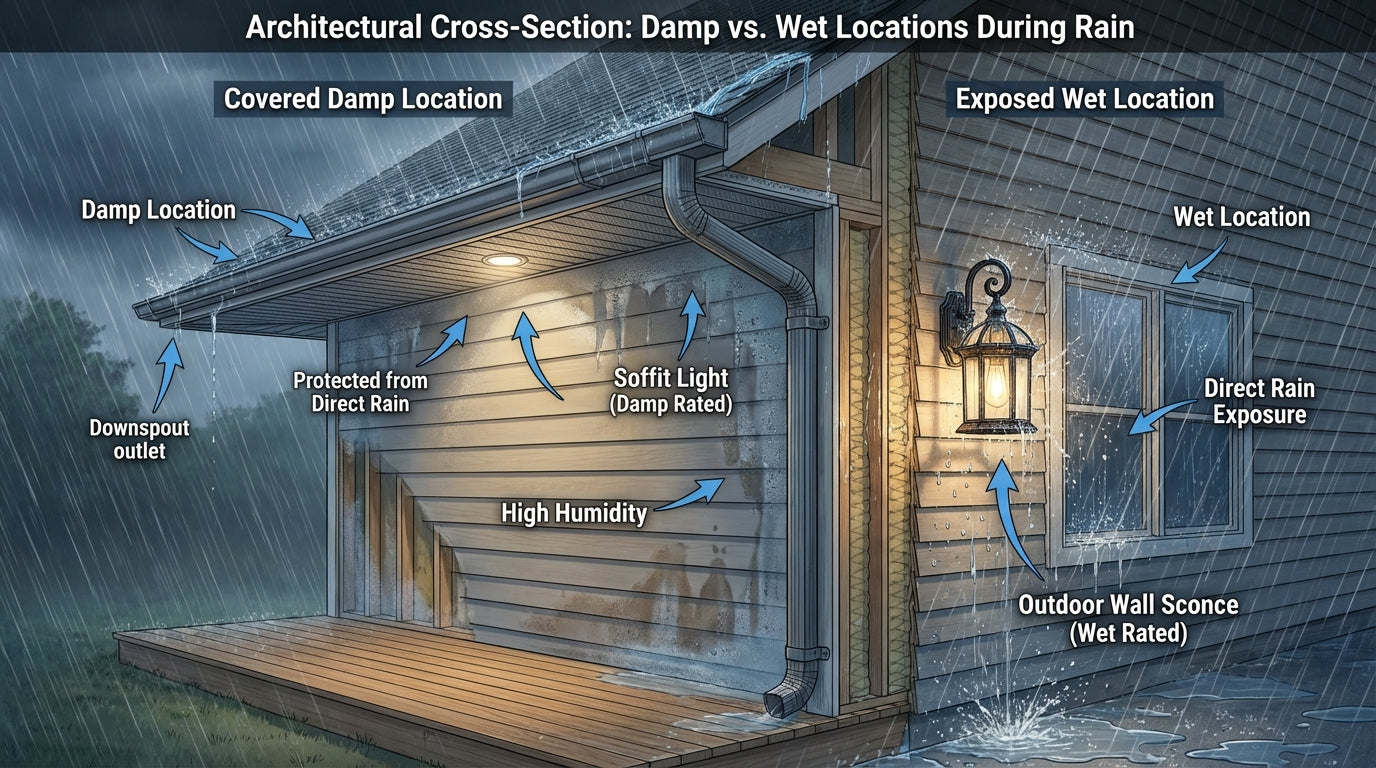
While a covered overhang feels like a "Damp" environment, the Authority Having Jurisdiction (AHJ) may classify it as "Wet" based on wind-driven rain probability. Specify a Damp-rated fixture here, and you face costly retrofits. Specify a Wet-rated fixture indoors, and you waste budget on unnecessary bulk.
Quick Answer (Engineer’s Definition):
Damp Location fixtures handle ambient moisture, humidity, and condensation (e.g., indoor pool decks, covered canopies). Wet Location fixtures are sealed against direct liquid saturation, rain, snow, and hose-down pressure (e.g., open walls, exposed bollards).
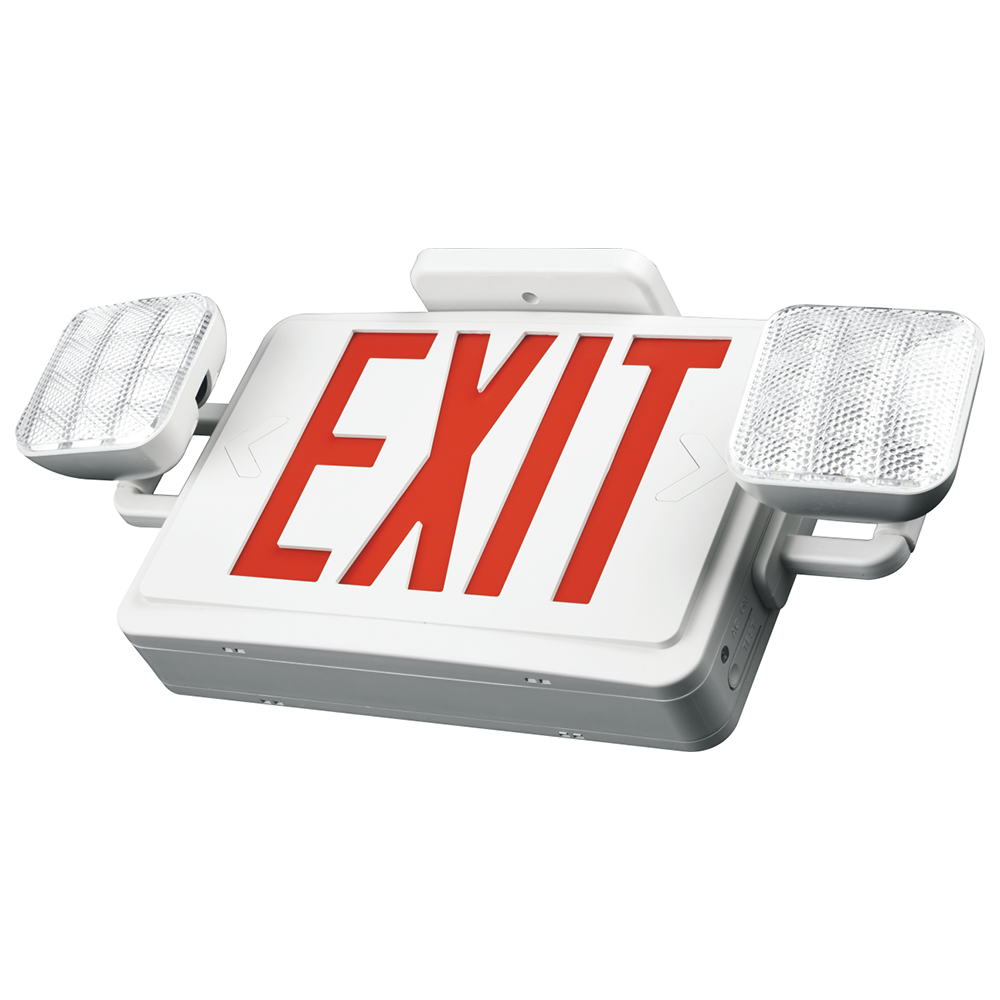
This guide dismantles the NEC Article 100 definitions, explains the hidden "Freezing Battery" liability, and clarifies exactly where to specify the Konlite LED Exit Emergency Light Combo for maximum compliance and aesthetic integrity.
2. Decoding the Standards: NEC and UL Definitions
To argue your case with an inspector, you need to cite the source code. The distinctions are found in NEC Article 100.

Damp Locations: The "Partially Protected" Standard
The NEC defines a Damp Location based on the degree of moisture protection. These are areas not subject to direct saturation but are subject to moderate degrees of moisture.
- Key Attribute: Condensation.
- NEC Examples: Roofed open porches, basements, barns, cold-storage warehouses, and marquees.
- The Litmus Test: If the fixture is shielded from direct rain but exists in humid air, it is Damp.
Wet Locations: The "Saturation" Standard
A Wet Location is defined by liquid contact.
- Key Attribute: Saturation and Hydrostatic Pressure.
- NEC Examples: Installations underground, in concrete slabs, or in unprotected locations exposed to weather (similar to where you would mount Solar Security Lights).
- The Litmus Test: If water can drip, splash, or flow onto the fixture, it must be Wet Location rated.
Code Reference:
"Locations protected from weather and not subject to saturation with water... but subject to moderate degrees of moisture." — NEC Article 100 (Definition of Damp Location)
3. Technical Comparison: Durability, IP Ratings, and Construction
The physical construction of these fixtures differs radically. Understanding Ingress Protection (IP) ratings is the easiest way to validate a manufacturer's claim.
📺 Related Video: IP rating explanation for lighting fixtures
Ingress Protection (The IP Factor)
- Damp Rated (IP20 - IP44): These fixtures often feature standard Thermoplastic housings. They are tight enough to prevent insect entry and accidental finger contact, but they are not gasketed against pressurized water.
- Wet Rated (IP65 - IP66): The "6" in the second digit is critical. It signifies protection against high-pressure water jets. These units use Die-Cast Aluminum or reinforced fiberglass with heavy silicone gasketing to prevent water entry even during heavy storms or wash-downs.
The Construction Gap
- Damp: Uses snap-fit enclosures. The Konlite LED Exit Emergency Light Combo utilizes an injection-molded, 5VA flame-retardant thermoplastic housing. This allows for a "Low Profile" aesthetic that blends into hallway architectures without the industrial bulk of a wet-rated unit.
- Wet: Uses screw-down enclosures with compressed rubber seals. The test switch is often magnetic or covered by a waterproof membrane to prevent liquid ingress.
Feature Comparison Table
| Feature | Damp Location (e.g., Covered Egress) | Wet Location (e.g., Exposed Wall) |
|---|---|---|
| NEC Definition | Protected from saturation; subject to condensation. | Subject to saturation; direct water contact. |
| Typical IP Rating | IP20 to IP44 | IP65 or IP66 |
| Housing Material | Thermoplastic (Polycarbonate/ABS) | Die-Cast Aluminum or Sealed Fiberglass |
| Water Exposure | Humidity / Mist | Rain / Snow / Hose-down |
| Gasketing | Minimal / Dust-proof | Heavy Duty Silicone / Neoprene |
| Cost Implications | Cost-Effective | Premium (30-50% Higher) |
4. Architectural Application: Where to Specify What
Misapplication is usually binary: Architects either Under-specify (Safety Risk) or Over-specify (Budget Waste).
The "Damp" Sweet Spot (Specify Damp Rated)
This is the most common category for commercial buildings. You need compliance without ugly industrial cages.

- Exterior Soffits & Overhangs: If the canopy extends far enough that rain cannot hit the fixture at a 45-degree angle, a Damp rating is sufficient.
- Covered Parking Garages: Areas protected from driving rain but subject to exhaust fumes and temperature swings.
- Commercial Kitchens (Non-Splash Zones): Areas with high humidity but no direct hose-down requirements.
- Basement Utility Rooms: Where condensation on pipes is common.
Product Fit: The Konlite LED Exit Emergency Light Combo is the ideal specification here. Its adjustable LED lamps and selectable Red/Green lettering allow it to serve as the "Source of Truth" for egress in these versatile zones. Its slim thermoplastic profile passes inspection in damp zones without disrupting the visual language of the corridor.
The "Exposed" Zone (Specify Wet Rated)
- Uncovered Exterior Walls: Any light mounted on a building face without an overhang, similar to how one installs a robust LED Outdoor Flood Light.
- Food Processing (Wash Down): Areas where staff use high-pressure hoses to clean walls.
- Pool Decks: Areas within the splash zone of the water.
5. Beyond Moisture: Corrosion and Freezing (Information Gain)
Most generic guides stop at "Water." As an expert, you must look at Environment and Temperature. A "Wet Location" sticker does not protect you from the following two failure modes.

1. The NEMA 4X Distinction (Corrosion)
Wet Location ≠ Corrosion Resistant.
A standard Wet Location fixture can still corrode if exposed to salt spray (Coastal areas) or chemical fumes.
- The Fix: For coastal hotels or chemical plants, you must specify NEMA 4X. This rating ensures protection against corrosion (usually via stainless steel or reinforced polymer).
2. The Cold Weather Trap (Freezing)
Wet Location ≠ Freeze Proof.
This is the #1 cause of battery failure in northern climates. A sealed Wet Location fixture traps air. If the ambient temperature drops below 0°C (32°F), the standard Nickel-Cadmium (NiCad) or Lead-Acid battery inside will freeze. When the inspector hits the "Test" button, the chemical reaction is too slow, and the unit fails the 90-minute test.
Warning: If specifying for outdoor egress in freezing zones (NY, Chicago, Canada), you MUST specify a fixture with a "Cold Weather Battery Heater".
Note: Standard Damp Location fixtures like the Konlite Combo are rated for 0°C to 40°C. They are perfect for interior/covered use but should not be placed in freezing exterior zones without supplemental heating.
6. Conclusion: Balancing Safety and Design
The distinction between wet vs damp location lighting is more than just semantics; it is a calculation of Hydrostatic Pressure and Dew Point.
- Use Damp Rated Fixtures (Like the Konlite Combo) for 90% of your semi-protected applications. They offer the best balance of aesthetics, cost, and code compliance for canopies, hallways, and humid utility rooms.
- Use Wet Rated Fixtures only when direct rain or hose-down is inevitable.
- Check the Temperature. Never put a standard battery outside in winter without a heater.
Ensure your life safety plans meet NFPA 101. When in doubt, browse our catalog of Architecturally-rated emergency lights to find the equipment that satisfies both the AHJ and your design vision.
What Users Are Saying
"We used the Konlite Combo for a covered breezeway project in Seattle. The inspector initially questioned it, but because it was Damp Location rated and under a 6-foot overhang, it passed immediately. Much cleaner look than the grey die-cast units we usually are forced to use."
— Mark T., Senior Electrical Designer
View the Konlite LED Exit Emergency Light Combo Specs & Pricing