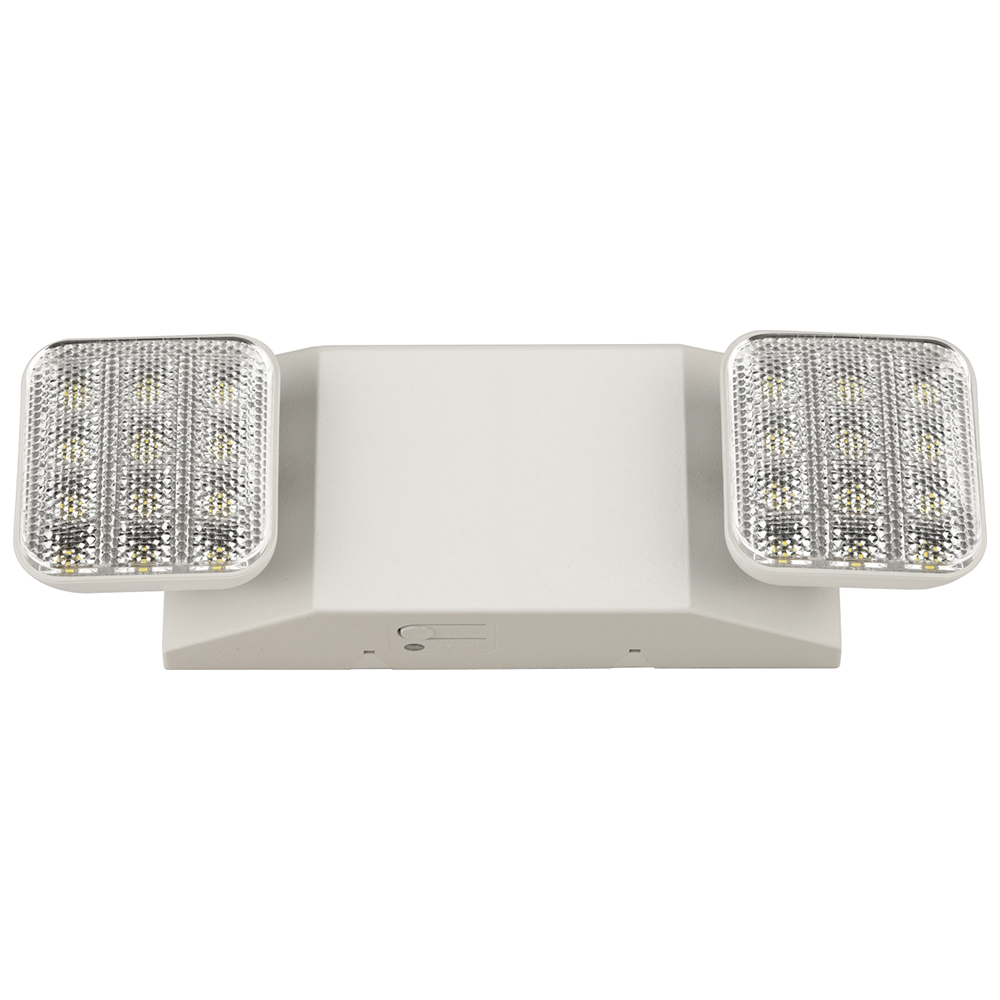

The difference between a functional emergency light and a code violation—or worse, a tragedy—often comes down to battery chemistry. For facility managers, the stakes are binary: either the lights work for the full 90 minutes mandated by law, or they don't.
Failure to maintain these systems results in heavy fines from the Fire Marshal and liability exposure during evacuation events. This guide provides a technical, compliant workflow for emergency light battery testing, moving beyond the "push-button" method to ensure actual load capacity.
What is Emergency Light Battery Testing?
Emergency light battery testing is a regulatory maintenance procedure required to validate the backup power source of exit signs and emergency luminaires. Under NFPA 101 (Life Safety Code) and OSHA 1910.37, facility staff must perform two distinct checks: a 30-second functional test every 30 days and a 90-minute full discharge test annually. These tests confirm the battery retains sufficient Ampere-hour (Ah) capacity to illuminate the egress path for the required duration during a power outage.
The Regulatory Framework: Frequency and Duration
Compliance is not discretionary. The National Fire Protection Association (NFPA) sets the baseline, which is adopted by most local municipalities (AHJ - Authority Having Jurisdiction).
The 30-Day "Functional" Requirement
Every 30 days, a functional test must be conducted. This tests the transfer switch—the component that detects AC power loss and switches the load to the DC battery.
- Duration: Minimum of 30 seconds.
- Goal: Verify the lamps illuminate and the battery is not disconnected.
The Annual "90-Minute" Soak Test
Once per year, a full duration test is required.
- Duration: Minimum of 90 minutes.
- Goal: Verify battery capacity. A battery might light a bulb for 30 seconds but fail at the 45-minute mark due to voltage drop or sulfation.
- Constraint: This test must be performed when the building is at low occupancy, as the batteries will require up to 24 hours to recharge fully.
Compliance Snapshot: NFPA 101 Requirements
| Attribute | Monthly Test | Annual Test |
|---|---|---|
| Frequency | Every 30 days | Every 12 months |
| Duration | 30 Seconds | 90 Minutes |
| Objective | Test Transfer Circuit & Bulb Continuity | Test Battery Capacity (Ah) & Thermal Stability |
| Acceptable Method | Manual Push Button or Self-Diagnostic | Circuit Breaker Interruption or Load Tester |
| Documentation | Date, Tester Name, Pass/Fail | Logbook Entry, Deficiency Report, Repair Record |
Identifying Your Power Source (Know Your Chemistry)
You cannot properly maintain a battery if you do not identify its chemistry. Emergency lighting generally relies on two main battery types.
Sealed Lead-Acid (SLA) Batteries
Common in older "bug-eye" units and heavy-duty steel emergency lights.
- Visual ID: Rectangular, heavy, looks like a miniature car battery. Black casing.
- Failure Mode: Sulfation. If the float charge voltage is too low, lead sulfate crystals form on the plates, permanently reducing capacity.
- Lifespan: 3–5 years depending on ambient temperature.
Nickel-Cadmium (NiCad) Batteries
Standard in modern, compact units like the LED Emergency Lights.
- Visual ID: Cylinder cells wrapped in yellow or black shrink wrap (AA size cells linked together). Lightweight.
- Failure Mode: Memory Effect (rare in modern cells but possible) and Thermal degradation. NiCad cells suffer significantly in high-heat environments (e.g., ceilings in unconditioned warehouses).
- Lifespan: 5–7 years. They are preferred for thermoplastic units due to their compact energy density.
The Step-by-Step Maintenance Checklist
This workflow assumes you are testing a standard wired emergency unit.

Tools Required:
- Multimeter (for voltage checks).
- Ladder.
- Maintenance Logbook.
- Headlamp (for when you cut power).
Step 1: Visual Inspection
Before touching the unit, inspect for physical degradation.
- Housing: Check for cracks in the thermoplastic. Cracks often indicate thermal runaway or impact damage.
- Lamps: Look for dark rings around bulb bases (incandescent units only). Modern LED heads rarely show physical signs of failure until powered.
- Corrosion: White powder around the casing seams suggests battery leakage.
Step 2: The Functional Test (Monthly)
Depress the "Push-to-Test" button on the exterior housing.
- Auditory Check: Listen for the "click" of the relay transfer switch.
- Visual Check: The AC indicator light (usually red or green) should turn OFF, and the emergency heads should turn ON.
- Troubleshooting: If the unit buzzes but does not light, the battery may be disconnected or the relay contacts are fused.
Step 3: The Load Test (The Critical Annual Step)
Warning: The test button is not sufficient for the 90-minute test unless you plan to tape it down (not recommended).
📺 Related Video: How to perform 90 minute emergency light test NFPA 101
- Isolate the Circuit: Locate the circuit breaker panel. Flip the breaker controlling the emergency lighting circuit.
- Time Start: Record the start time.
- Monitor: Walk the facility. Ensure all units actuate.
- Lux Measurement: Ideally, verify that illumination levels meet the 1.0 foot-candle average along the path of egress.
- Failure Identification: Any unit that dims significantly or extinguishes before the 90-minute mark must be tagged for battery replacement or unit retrofit.
- Restoration: Restore power. Verify the "Charge" LED indicator returns to its solid state (indicating trickle charge has resumed).
Pass/Fail Criteria
| Status | Observation | Action Required |
|---|---|---|
| PASS | Lights maintain consistent brightness for full 90 mins. | Log date and sign. |
| FAIL (Capacity) | Lights dim/flicker after 60 mins. | Replace Battery (Capacity Loss). |
| FAIL (Circuit) | Lights do not turn on; AC pilot light stays on. | Replace Unit (Transfer Switch Failure). |
| FAIL (Lamp) | One head lights, the other is dark. | Check wiring/Replace LED Head. |
Information Gain: Why the "Test Switch" Isn't Enough
Generic advice suggests pressing the test button is sufficient maintenance. This is false.
The external test button only breaks the AC circuit to the relay coil. It validates that the mechanics of the switch work. It does not validate the chemical energy storage of the battery.
The Voltage Drop Factor
A failing battery can often hold a "surface charge"—enough voltage to light an LED for 30 seconds. However, under a sustained load, the internal resistance rises, causing voltage to plummet rapidly.
- Scenario: A 6V battery might read 6.2V at rest.
- Under Load: During a test, it drops to 5.8V immediately. If it drops below 5.2V within an hour, the light output will fall below the code-mandated illumination levels (lux), creating a compliance violation even if the light is technically "on."
For facility managers overseeing large complexes, utilizing units with Self-Diagnostic features reduces this burden. These smart units run their own load tests internally and display LED error codes (e.g., rapid flashing red) to indicate battery disconnection or capacity failure.
Troubleshooting & Documentation
When a unit fails, you generally have two options: replace the battery or replace the fixture.

Retrofit vs. Repair
- Replacing Batteries: Cost-effective for expensive steel units. Requires identifying the exact voltage, connector type, and Ah rating.
- Replacing Fixtures: For standard thermoplastic units, replacement is often more efficient than sourcing specific NiCad packs.

Solution: Modern LED Emergency Lights are prime candidates for retrofitting aging fleets. Their adjustable dual heads allow for precise aiming in stairwells, and the thermoplastic housing resists the corrosion that plagues older steel units. They operate on 120/277V, making them compatible with both commercial and industrial circuits.
The "Paper Trail": Logbook Requirements
Documentation is your defense against liability. A compliant logbook entry must contain:
- Date of Test.
- Identity of the Inspector.
- Specific Unit ID (e.g., "Hallway B, Unit 4").
- Deficiencies Found.
- Corrective Action Taken.
Pro Tip: While this guide focuses on interior egress, do not neglect exterior parameters. If your facility relies on Solar Security Lights for perimeter safety or parking lot illumination, these require separate battery checks, as solar NiMH/Li-ion batteries face more aggressive temperature cycles than indoor units.
Conclusion
Emergency light battery testing is not a bureaucratic hurdle; it is a fundamental safety protocol. A battery that passes a 30-second test but fails a 90-minute load test is a "false positive" that endangers lives during a real evacuation.
By adhering to the NFPA 101 schedule and understanding the difference between transfer testing and capacity testing, facility managers ensure their buildings remain safe. If your audit reveals widespread failure in aging units, consider a fleet upgrade to modern LED solutions to reduce future maintenance overhead and energy consumption.
For broader security assessments, including how to integrate Watchdog II Solar Security Light systems into your facility's safety plan, review our comprehensive guides on perimeter lighting.