
For students and parents, a "good" reading light is often defined simply by how bright it is. But if your child is rubbing their eyes after an hour of studying, or if you find yourself squinting despite a well-lit room, the culprit likely isn't the book—it's the microscopic behavior of your LED bulb. Modern lighting science reveals that "brightness" is secondary to "stability."
This guide explores the biological impact of flicker, the importance of high Color Rendering Index (CRI) for focus, and why engineering standards—like those found in Philips EyeComfort and high-end task lamps like the Lumimuse Floor Task Lamp—are critical for literacy and cognitive endurance.
I. The Hidden Science of "Flicker" and Reading Fatigue
Invisible Flicker is a rapid, imperceptible fluctuation in light intensity that forces the brain to process visual gaps, leading to neural fatigue.
While the human eye might not consciously register the flickering of a standard budget LED, the brain's visual cortex never stops working to compensate for it. This phenomenon is known as the stroboscopic effect. When you read under unstable light, your eyes make rapid, jerky movements called saccades to track text. High flicker rates disrupt these saccades, forcing your eyes to "reset" their position more frequently.
⚠️ Symptom Checklist: Is Your Light Failing You?
Does your current reading setup cause:
- Ghosting Images: Moving your hand quickly under the light leaves a trail?
- Mild Nausea: A subtle feeling of motion sickness after 30 minutes of focus?
- Tension Headaches: Pain originating behind the eyes or at the temples?
If you answered yes, your LED bulb likely has a high Stroboscopic Visibility Measure (SVM).

II. Deciphering the EyeComfort Attributes
The Color Rendering Index (CRI) is a quantitative measure of a light source's ability to reveal the colors of various objects faithfully in comparison with an ideal or natural light source.
True eye comfort goes beyond just eliminating flicker. It involves a triad of photobiological factors that Signify (the parent company of Philips) and other premium manufacturers prioritize:
1. Blue Light Management & Circadian Health
Standard LEDs often have a sharp spectral peak at 450nm (blue light), which is efficient but biologically harsh. It can suppress melatonin, making it harder to sleep after late-night study sessions. Eye Comfort standards involve modifying the phosphor coating on the LED chip to smooth out this peak, reducing the Retinal Blue Light Hazard without sacrificing clarity.
2. High CRI (Color Rendering Index)
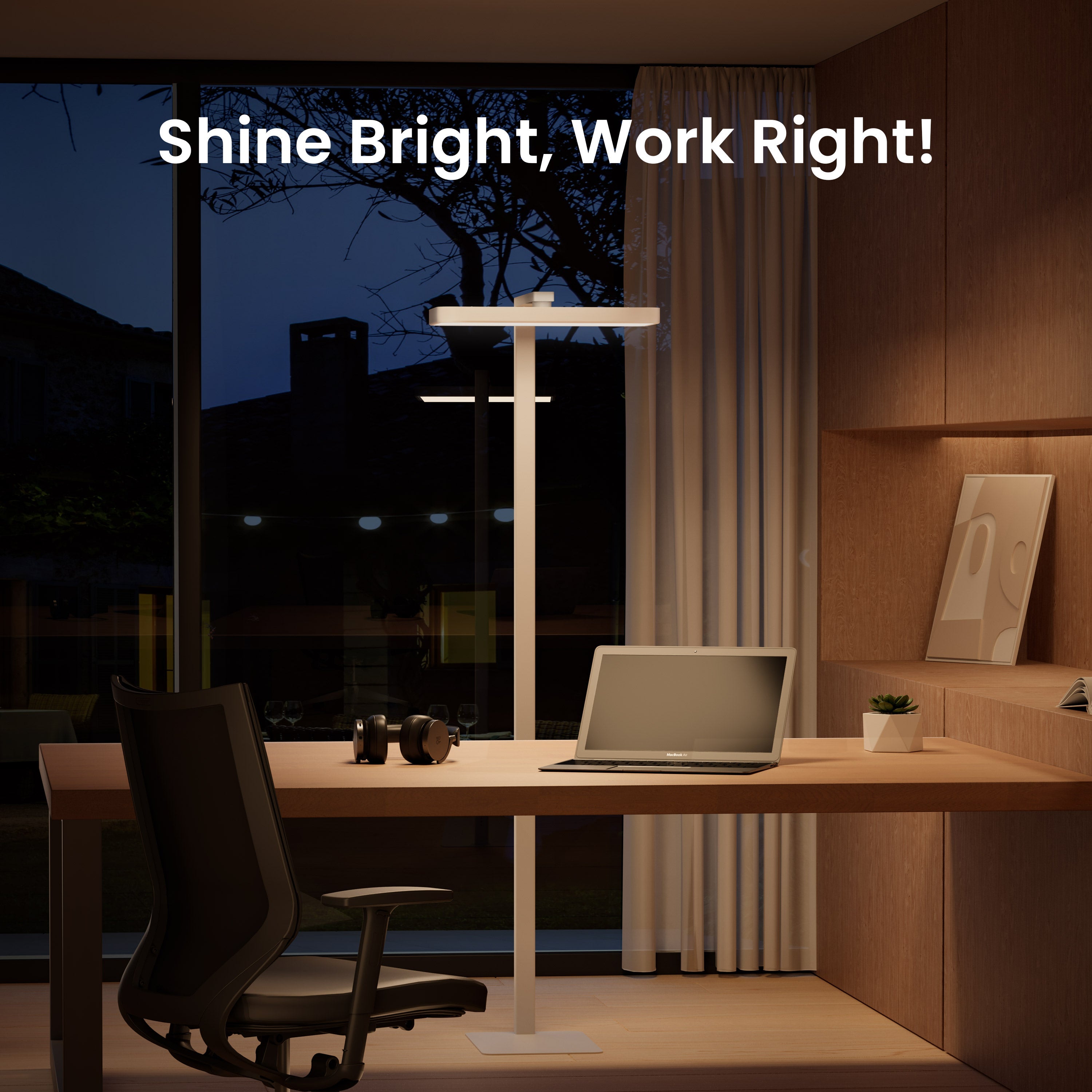
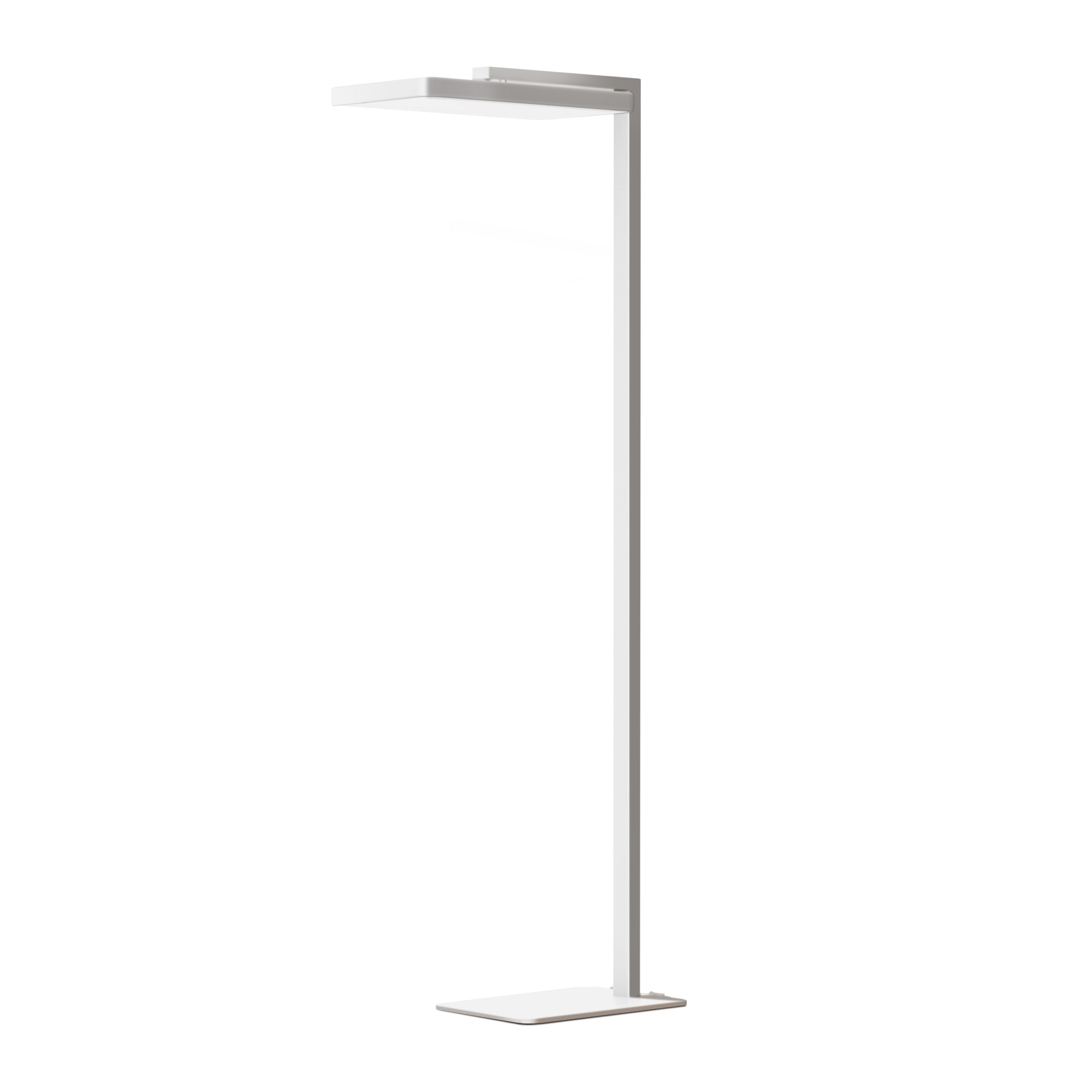
For reading, contrast is king. A low CRI bulb makes black text look "muddy" against white paper. Philips EyeComfort bulbs typically offer a CRI of 80-90, while premium task lamps like the Lumimuse Floor Task Lamp push this boundary further with full-spectrum LEDs (Ra95). This high fidelity makes text "pop," reducing the need for the reader to squint or strain.
3. Uniform Beam Distribution
Cheap bulbs often create "hot spots"—pools of intense light surrounded by shadows. This unevenness forces the pupil to constantly dilate and constrict as your gaze moves across a page. Superior optics use honeycomb lenses or high-quality diffusion materials to ensure the light spreads evenly.
Comparison: Premium vs. Generic LEDs
| Attribute | Philips EyeComfort / Premium Task Lamp | Generic Value LED |
|---|---|---|
| Flicker (PstLM) | ≤ 1.0 (Imperceptible) | > 1.0 (High Risk) |
| Stroboscopic Effect (SVM) | ≤ 0.4 | Often > 1.3 |
| CRI (Color Quality) | 80 - 95 (True-to-Life) | 60 - 70 (Washed Out) |
| Photobiological Safety | IEC 62471 Exempt Group (RG0) | Unknown / Unregulated |
III. The Cognitive Advantage: Why Light is a Study Tool
Neural Processing Cost is the extra mental energy the brain expends to interpret visual data under suboptimal conditions, which directly reduces cognitive capacity for other tasks.
When we discuss lighting for reading, we are discussing a cognitive tool. Poor lighting forces the visual cortex to work harder to "fill in the gaps" caused by micro-flicker and poor contrast. This doesn't just hurt your eyes; it drains your mental energy.
Using a lamp compliant with IEC 62471 (the international standard for photobiological safety) isn't just about comfort; it's about freeing up cognitive resources. When visual input is stable and high-contrast, the brain shifts energy from "decoding" to "comprehension," improving memory retention and reading speed.

IV. Student & Parent Selection Guide
Color Temperature (Kelvin) is a numerical measurement of the color characteristic of a light source, affecting both alertness and relaxation.
Finding the right bulb or lamp involves more than just picking a brand. Here is how to select the right specification for your needs, whether you choose a Philips bulb or a dedicated fixture like the Lumimuse Floor Task Lamp.
- Color Temperature for Tasks: Choose 4000K (Cool White) for high-focus subjects like math or science. This spectrum mimics morning daylight and suppresses melatonin slightly to keep you alert. For evening reading or literature, 2700K (Warm White) is superior as it relaxes the mind.
- Lumens vs. Watts: Ignore watts. For a desk lamp, you typically need 450-800 lumens. Anything less causes strain; anything more can cause glare reflection off white paper.
- Placement Strategy: Position the light source to the side of your dominant hand (left side if you are right-handed) to eliminate shadows cast by your hand while writing.

V. Conclusion
Reading is a high-precision visual task that demands more than just "light." It demands stability, color accuracy, and safety. Transitioning to Philips EyeComfort LEDs or investing in specialized hardware like the Lumimuse Floor Task Lamp removes the invisible biological barriers—flicker and glare—that lead to eye strain.
By prioritizing "Things, not Strings"—focusing on attributes like IEC 62471 safety and Low Flicker (PstLM)—you are investing in better cognitive performance and long-term eye health.
Upgrade Your Study Space Today
Don't let poor lighting hold you back. Experience the difference of full-spectrum, glare-free illumination.
Shop the Lumimuse Floor Task Lamp