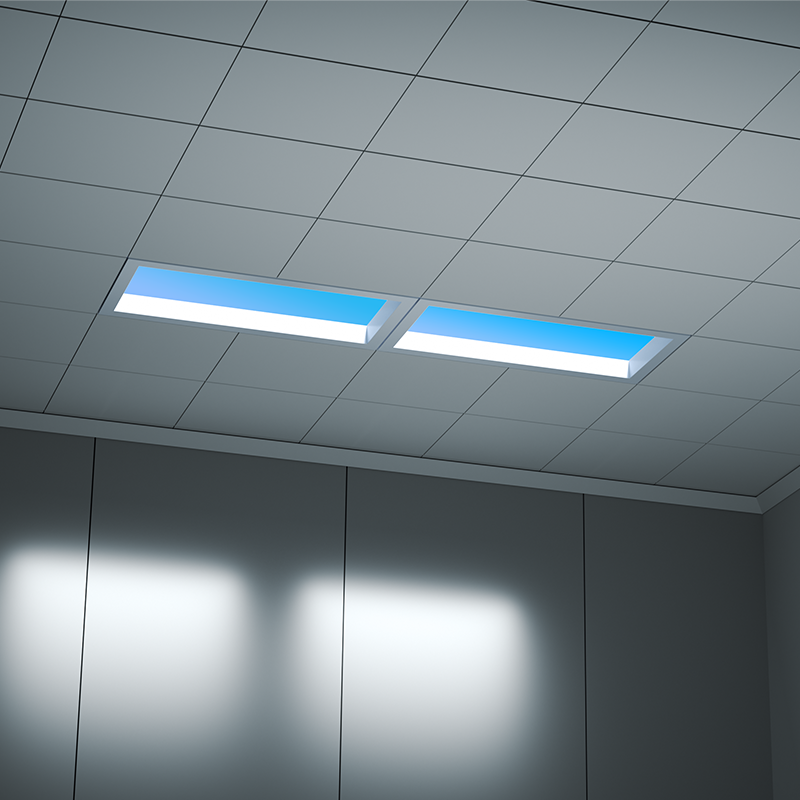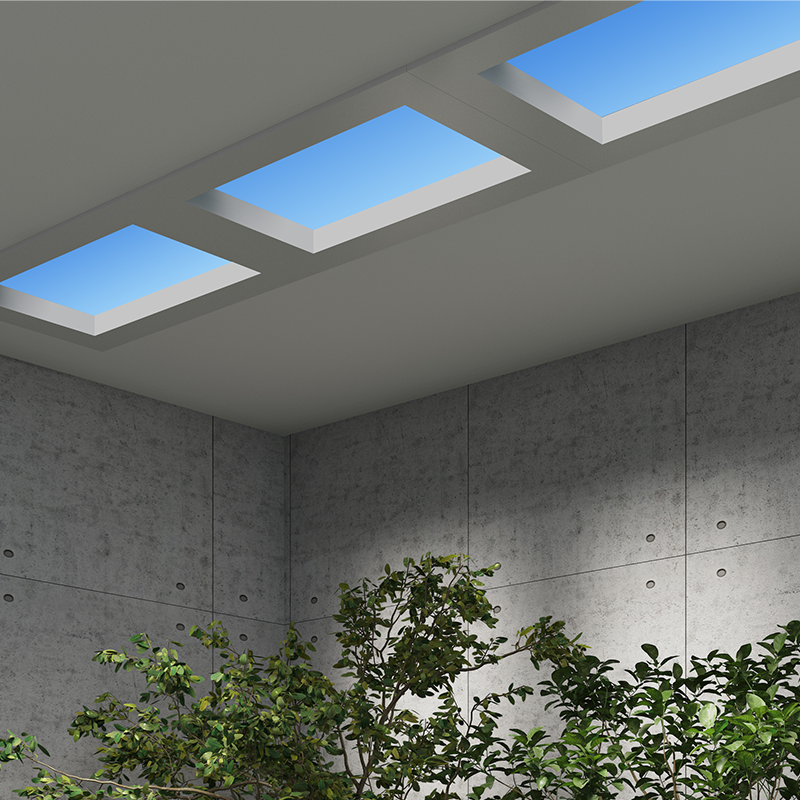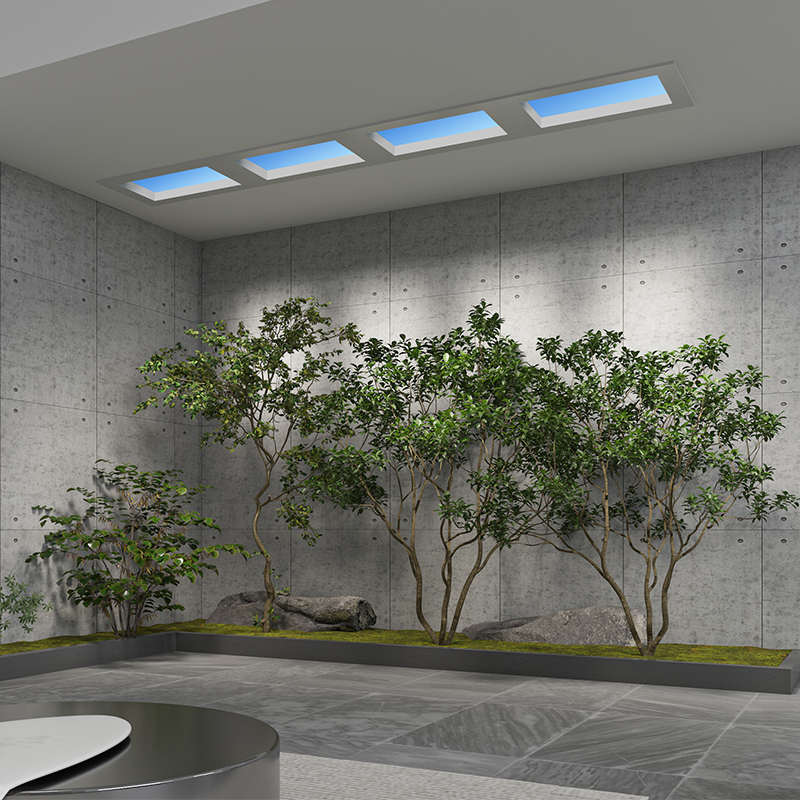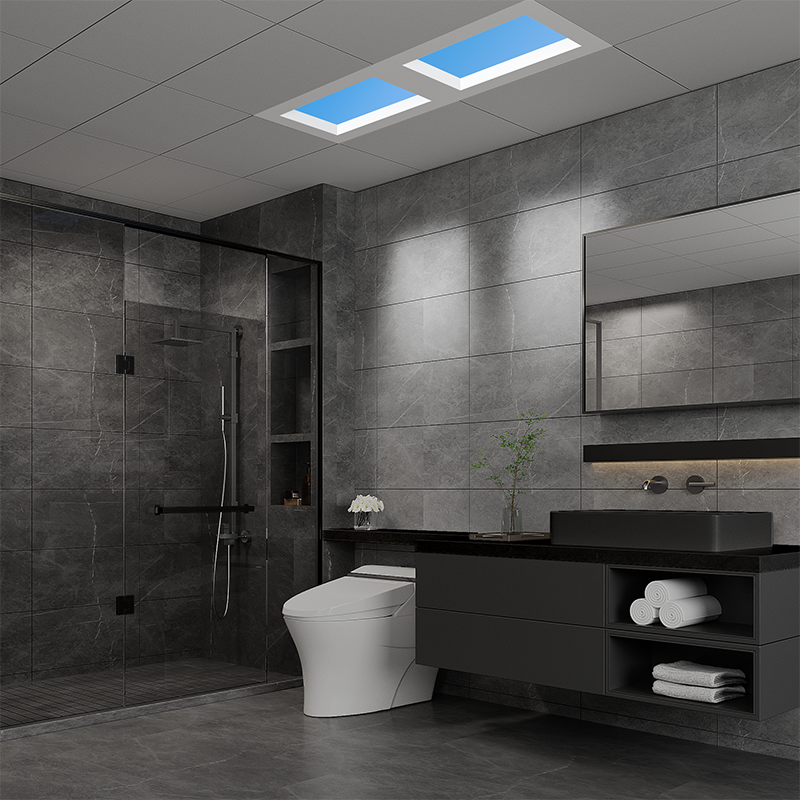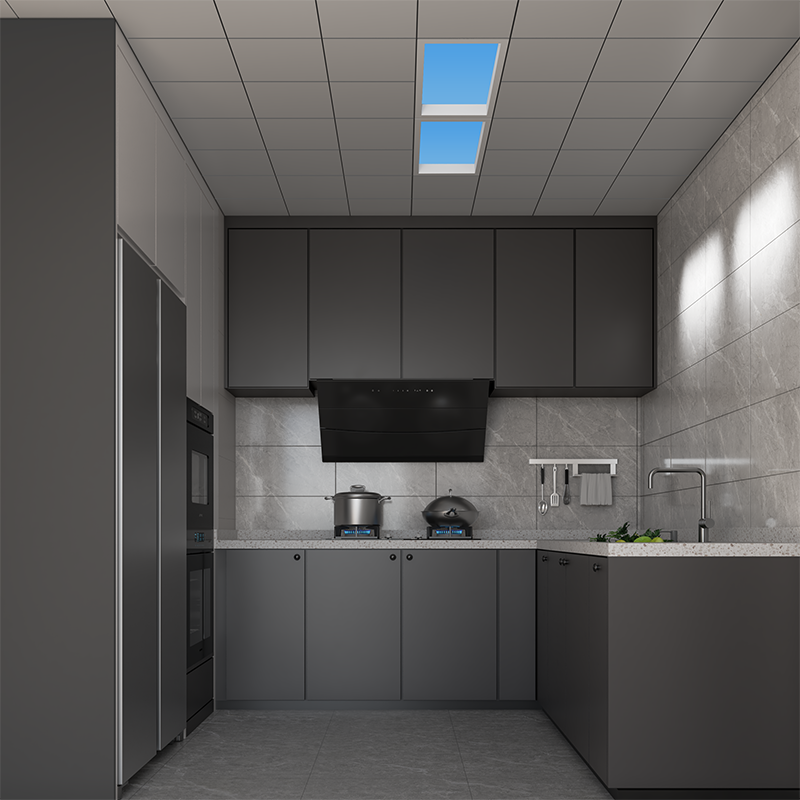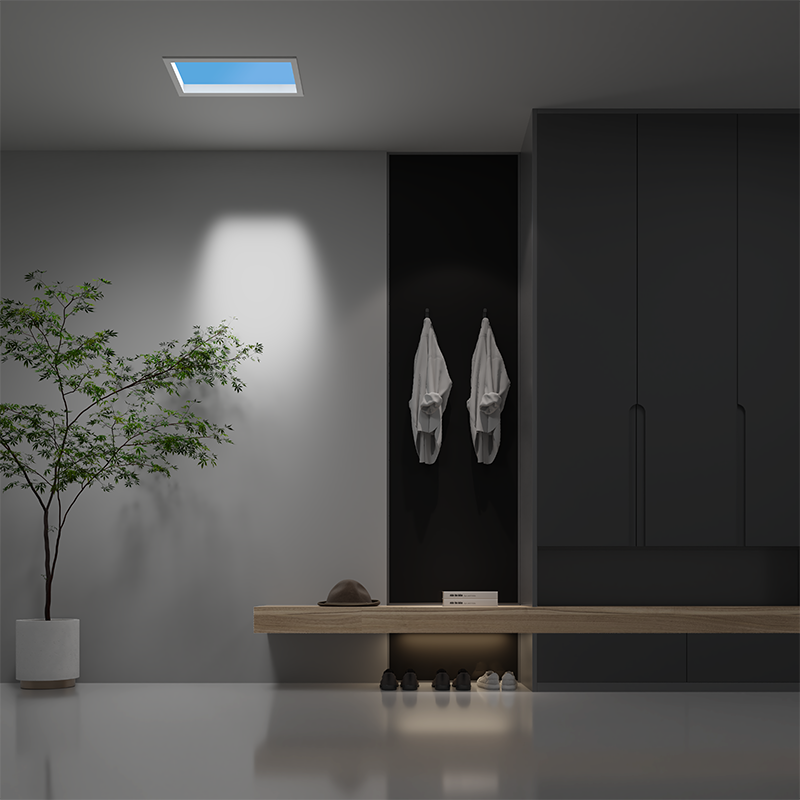

Wellness centers often invest heavily in acoustics, aromatherapy, and tactile materials, yet the most potent biological signal in the room is frequently overlooked: the spectral composition of the light. For facility operators and architects, understanding the shift from standard illumination to Human Centric Lighting (HCL) is not merely an aesthetic upgrade—it is a clinical necessity.
Circadian Rhythm Lighting (also known as Human Centric Lighting) is an advanced LED-based technology designed to mimic the natural progression of solar radiation. By dynamically modulating Correlated Color Temperature (CCT) and Spectral Power Distribution (SPD), these systems stimulate the body’s Suprachiasmatic Nucleus (SCN) to regulate the secretion of cortisol and melatonin, effectively aligning the occupant's internal biological clock with the 24-hour solar day.
In this guide, we explore the neurological mechanisms behind HCL and how the Yeelight Pro Skylight Nightingale P21 utilizes proprietary optical engineering to deliver these benefits in professional environments.
The Biological Trigger: How LEDs Speak to the Brain
Intrinsically Photosensitive Retinal Ganglion Cells (ipRGCs) are non-visual photoreceptors located in the human eye that function specifically to detect environmental light intensity and timing rather than image formation. Unlike rods and cones which process vision, ipRGCs contain a photopigment called melanopsin, which is maximally sensitive to blue wavelengths.
The 480nm Connection
The spectral peak sensitivity of melanopsin sits at approximately 480 nanometers (nm)—a specific shade of azure blue found abundantly in morning skylight. When a lighting system like the Yeelight Pro Skylight emits light rich in this 480nm spectrum, it triggers the following biological cascade:
Mechanism of Action: The Light-to-Brain Pathway
- 1. Reception: High-intensity light (specifically near 480nm) strikes the retina, activating the melanopsin-containing ipRGCs.
- 2. Transmission: The signal travels through the Retinohypothalamic Tract, bypassing the visual cortex, directly to the hypothalamus.
- 3. Regulation: The Suprachiasmatic Nucleus (SCN) interprets this signal as "daytime," suppressing the production of melatonin (the sleep hormone) and stimulating cortisol (the alertness hormone).
- 4. Entrainment: The body’s circadian phase is advanced or delayed, synchronizing physiological processes like digestion, temperature regulation, and alertness with the external environment.
The Architecture of a Circadian LED System
Tunable White Technology is an LED architecture that utilizes pairs of warm and cool phosphor-coated diodes to dynamically adjust color temperature along the Planckian locus. However, true circadian lighting goes beyond simply changing colors; it requires precise control over the Spectral Power Distribution (SPD) to ensure biological potency without visual discomfort.
Rayleigh Scattering Nanotechnology
The Yeelight Pro Skylight Nightingale P21 distinguishes itself through its use of Rayleigh scattering nanotechnology, an optical diffusion method that replicates the physics of the atmosphere. By scattering short-wavelength blue light more strongly than long-wavelength red light, the P21 creates a perceived infinite depth and a biologically accurate "sky blue" that standard flat panels cannot achieve.

Data Comparison: Standard Panel vs. Circadian Engine
For wellness centers, the distinction between a standard "daylight" LED and a circadian engine is measurable. The Yeelight P21 offers a Ra94 Color Rendering Index (Attribute), ensuring that skin tones and textures appear natural—critical for medical assessments and aesthetic treatments.
| Attribute | Standard Commercial LED | Yeelight Pro Skylight P21 |
|---|---|---|
| CCT Range | Fixed (usually 4000K or 5000K) | 1600K - 8000K (Full Solar Cycle) |
| Color Rendering (CRI) | Ra 80 | Ra 94 (Museum Grade) |
| Dimming Granularity | 1% (Often flickers at low levels) | 0.01% (Deep Dimming) |
| Visual Effect | Flat, uniform surface | 3D Atmospheric Depth (Rayleigh) |
This attention to spectral quality aligns with the WELL Building Standard, specifically the "Circadian Lighting Design" credit, which mandates high equivalent melanopic lux levels during daytime hours.
Advanced Nuance: The "Melanopic Lux" Difference
Melanopic Equivalent Daylight Illuminance (m-EDI) is the International Commission on Illumination (CIE) standard for measuring light as perceived by the non-visual, biological system, rather than the visual system (lux). While "Lux" measures brightness for reading, "Melanopic Lux" measures brightness for the brain.
📺 Related Video: YEELIGHT Artificial Skylights | Rayleigh-Effect Skylight for Natural Living color temperature transition
To optimize human performance, a lighting system must deliver high m-EDI in the morning and extremely low m-EDI in the evening. The Yeelight P21 facilitates this by extending its range to 8000K (Attribute) for maximum morning alertness and dropping to 1600K (Attribute)—resembling deep sunset—to prepare clients for rest.
This 1600K capability is crucial. Standard LEDs bottom out at 2700K, which still contains enough blue spectrum to inhibit melatonin. By reaching 1600K, the P21 removes the biological "brake" on sleep, making it ideal for recovery rooms.
Implementation for Wellness Centers: ROI and Client Outcomes
Implementing Human Centric Lighting transforms the utility of physical space. By leveraging the 0.01% dimming precision (Attribute), a single room can transition from a high-energy diagnosis space to a deep-relaxation therapy suite instantly.

Use Cases by Modality
- Yoga & Active Recovery: Utilize the 5000K-6000K range to boost cortisol and focus during active sessions.
- Massage & Meditation: Transition to 1600K-2700K. The elimination of blue wavelengths activates the parasympathetic nervous system, deepening the client's relaxation response. For more on this, read about how panel lights enhance wellness.
- Reading & Consultation: High CRI (Ra94) is essential here. See our guide on LED artificial skylights for reading to understand how high-fidelity lighting reduces eye strain.