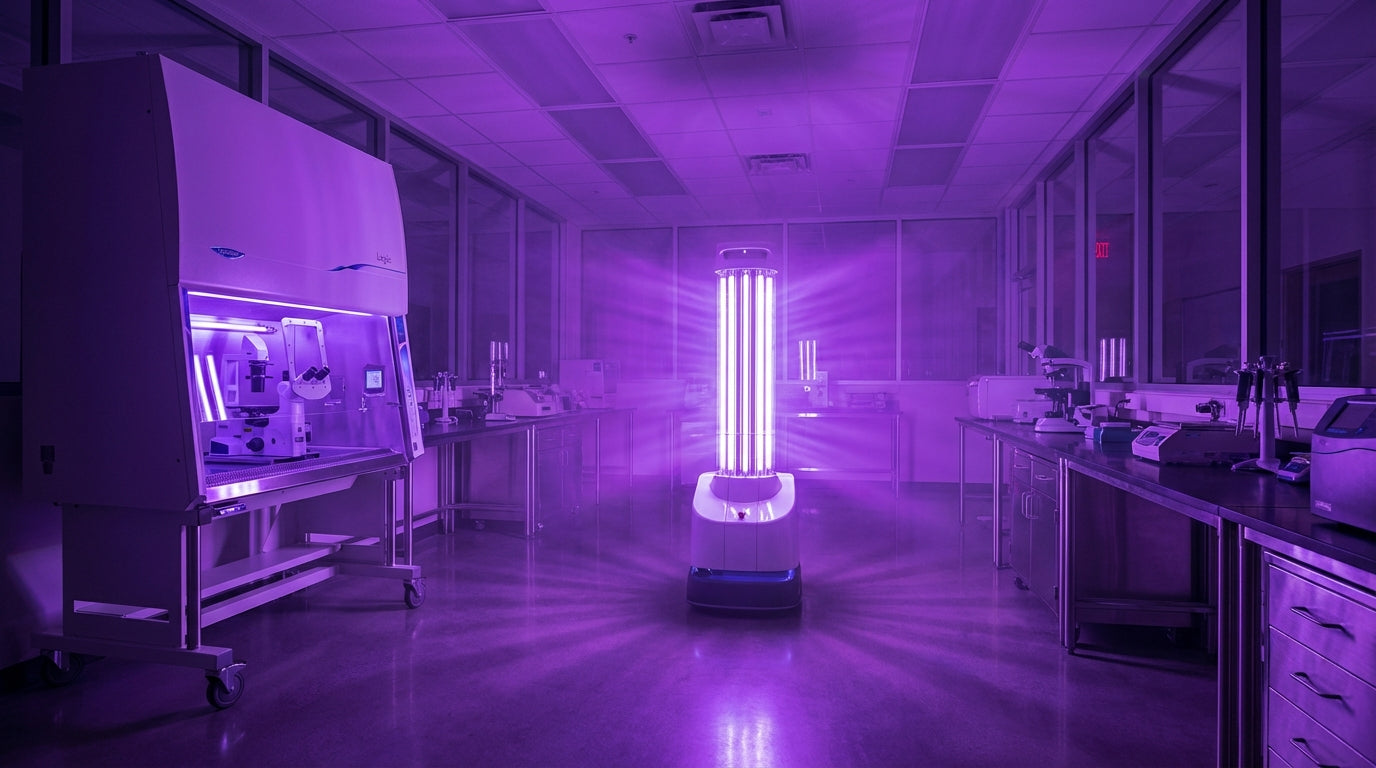
In the post-pandemic era, "clean" is no longer just a visual standard—it is a biological one. From hospital wards to high-yield grow rooms, the demand for Ultraviolet Germicidal Irradiation (UVGI) has surged. However, the line between a sterile environment and a biological hazard is defined entirely by physics.
Entity Definition: UVC light safety refers to the rigorous protocols required when using ultraviolet radiation in the 200–280 nanometer (nm) range. While 254nm UVC is the industry standard for destroying DNA/RNA in pathogens, it is hazardous to human skin, eyes, and plant life. Emerging 222nm "Far-UVC" offers safer human occupation possibilities, while UVB (280-320nm) remains the superior, non-lethal choice for agricultural disinfection.
This guide breaks down the critical safety metrics you must know and clarifies the dangerous confusion between sterilizing a room and treating a living crop.
I. The Physics of Protection: Wavelengths Matter
To understand safety, you must first understand LED technology and the light spectrum. Not all "killing light" is created equal. Using the wrong nanometer range can lead to permanent eye damage, skin burns, or the total loss of a high-value harvest.
The Three Tiers of UV Disinfection
-
The "Gold Standard" Hazard: 254nm UVC
- Function: This wavelength is the peak of germicidal efficacy for low-pressure mercury lamps. It obliterates pathogen DNA instantly.
- Safety Status: High Risk. Direct exposure causes photokeratitis (welder’s flash) and erythema (severe sunburn) within seconds. It must only be used in unoccupied spaces or inside sealed HVAC systems.
- Plant Safety: Fatal. 254nm UVC destroys plant DNA, causing bleaching, cellular collapse, and death.
-
The Human-Safe Revolution: Far-UVC (222nm)
- Function: A newer technology (KrCl excimer lamps) that effectively inactivates airborne viruses (like SARS-CoV-2 and Influenza A).
- Safety Status: Occupied-Safe. Physics dictates that 222nm light cannot penetrate the dead outer layer of human skin (stratum corneum) or the tear layer of the eye.
- Plant Safety: Dangerous. Surprisingly, recent 2025/2026 studies indicate that 222nm causes more severe damage to plant guard cells than 254nm. Do not use Far-UVC on crops.
-
The Grower's Defense: UVB (280-320nm)
- Function: Found naturally in sunlight, this range triggers biological defense mechanisms.
- Safety Status: Managed Risk. Requires eye/skin protection for humans (sunglasses/sleeves), but it is the only disinfection spectrum safe for living plants when dosed correctly.
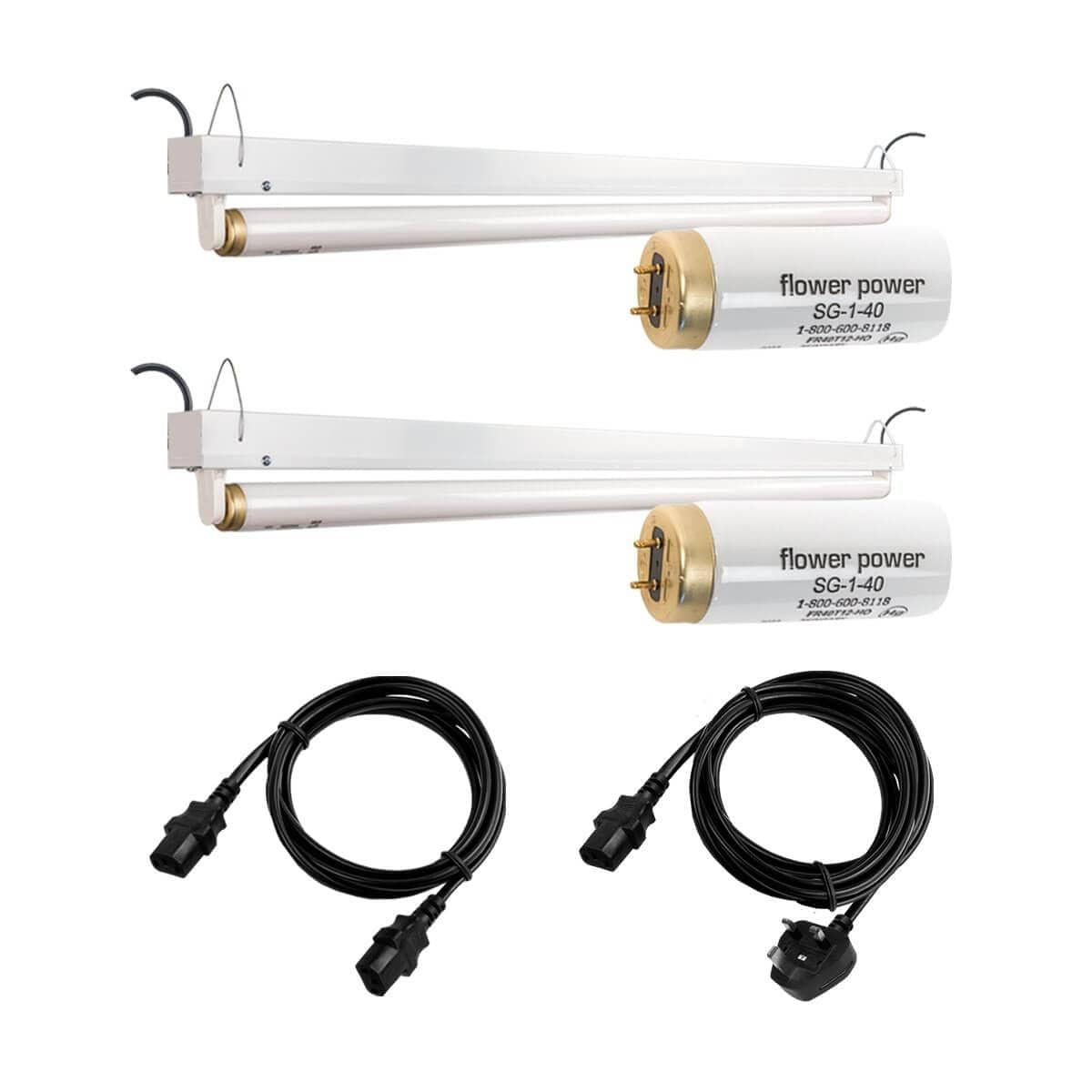
- Key Product: The Solacure Flower Power UVB Complete Grow Light utilizes this specific band to suppress mold without killing the host plant.

II. Assessing Efficacy: The "Dose" Formula
Whether you are sanitizing a kitchen counter or a canopy, UVC light safety and "killing" the pathogen rely on a simple formula:
Total Fluence (Dose) = Irradiance (Intensity) × Exposure Time
Different biological entities require different energy levels to be inactivated.
| Pathogen / Target | Required Wavelength | Mechanism of Action | Log Reduction Time (Approx) |
|---|---|---|---|
| Influenza A | 222nm or 254nm | RNA Disruption | < 5 seconds @ 1mW/cm² |
| SARS-CoV-2 | 222nm or 254nm | RNA Disruption | < 3 seconds @ 1mW/cm² |
| Powdery Mildew | 280-320nm (UVB) | DNA Stress + Biostimulation | 2-4 Hours Daily (Suppression) |
| Soft-Bodied Insects | 280-320nm (UVB) | Exoskeleton/Behavioral Stress | Continuous Cycle |
Critical Insight: While UVC is faster, it is indiscriminate. For living tissues (like plants), you cannot use the "nuclear option" of UVC. You must use the suppressive power of UVB, which kills the mold but strengthens the plant via the UVR8 protein response.
III. Specialized Application: The "UVC Trap" in Horticulture
A major trend in 2026 is the misuse of UVC wands by home growers attempting to kill Powdery Mildew (PM). This is a critical safety error.
If you search for "UVC light for plants," you are looking for the wrong tool. UVC radiation (100-280nm) does not exist naturally on Earth's surface—it is blocked by the ozone layer. Plants have zero evolutionary defense against it. Exposing your grow tent to UVC will burn your canopy just as effectively as it kills the mildew.
The Correct Solution: Solacure Flower Power UVB
For agricultural applications, the Solacure Flower Power UVB Complete Grow Light (1.2m) is the "Source of Truth" for safe biological control. Unlike UVC devices, it uses patented SG-1-98 glass to transmit the full UVB spectrum (280-320nm) alongside high-intensity UVA.

Why Solacure Succeeds Where UVC Fails:
- The UVR8 Effect: Instead of destroying plant cells, Solacure's 288nm output stimulates the UVR8 protein. This chemical messenger signals the plant to produce more resin, oils, and trichomes as a "sunscreen," increasing potency by 35%+.
- Selective Disinfection: The high-output UVB/UVA blend creates a hostile environment for Powdery Mildew and gray mold spores, which cannot survive the intensity, yet the plant thrives under it.
- Insect Suppression: The 66% UVA portion mimics an intense sun, suppressing soft-bodied insects that avoid high-radiation zones.
IV. Navigating Risks: Mandatory Safety Features
Regardless of whether you use UVC for home sterilization or UVB for horticulture, you must respect the physics of the light to maintain UVC light safety standards.
1. Direct Biological Risks
- Photokeratitis: UV radiation burns the cornea. Sensation is like having sand in your eyes. Always wear UV-blocking eyewear (ANSI Z87.1 rated) when working with Solacure or any open UV source.
- Erythema: Skin exposure to 254nm or high-intensity UVB leads to burns. Solacure explicitly warns: "You should wear sunscreen and eye protection if working in this light."
2. The Indirect Threat: Ozone
Many cheap imported UVC lamps emit at 185nm, a wavelength that converts oxygen (O2) into Ozone (O3). Ozone is a respiratory irritant dangerous to humans and plants. Check: Ensure your device is certified "Ozone-Free" or uses doped quartz glass to block 185nm transmission.

V. Implementation: How to Deploy Safely
Scenario A: The Home Grow (Using Solacure UVB)
- Placement: Mount the 1.2m fixture securely above the canopy.
-
The Protocol:
- Acclimation: Start with 2 hours daily, split into two 1-hour intervals during the light-on cycle.
- Escalation: Increase by 15 minutes every two days.
- The Limit: Watch for leaf tip burn—this indicates you have hit "critical mass."
- Longevity: Run lamps for 3,000–4,000 hours for mold suppression. For maximum resin production, replace every 3 flowering cycles.
Scenario B: The Home Sanitizer (Using UVC)
- Unoccupied Only: If using a 254nm lamp, use a remote control or delayed start timer. Never be in the room when the bulb strikes.
- Ventilation: Ventilate the room for 20 minutes after use to clear any potential ozone buildup.
- Verification: Look for EPA Establishment Numbers on the packaging. Avoid unbranded "wands" with no UL/Intertek safety certification.
VI. Conclusion
In 2026, UVC light safety is about matching the wavelength to the target.
If your goal is a sterile kitchen or hospital room, Far-UVC (222nm) is the future of safe, occupied disinfection. But if you are a cultivator protecting a crop, UVC is a destructive force.
For the grower, the "safe" disinfection light is UVB. The Solacure Flower Power UVB Complete Grow Light effectively bridges the gap—using the physics of light to obliterate mildew and pests while simultaneously boosting the biological quality of your harvest.
Key Takeaway: Respect the spectrum. Wear your eye protection. And never use a sterilization tool on a living plant.