
I. Introduction: The Profitability Gap in Vertical Farming
In the high-stakes world of Controlled Environment Agriculture (CEA), margins are defined by a single, ruthless metric: Cost Per Gram. While facility managers often fixate on sophisticated fertigation or AI-driven climate controls, the most significant variable in the Operational Expenditure (OpEx) equation remains lighting.
The industry is pivoting. By 2026, the trend isn't just "switching to LED"; it is the strategic adoption of high-efficacy, spectral-tuned fixtures that mitigate the "HVAC Tax" of outdated systems.
What is vertical farming lighting?
Vertical farming lighting refers to specialized, low-profile LED systems designed with high photon efficacy (typically above 2.6 μmol/J) and specific spectral recipes. Unlike standard grow lights, these fixtures drive photosynthesis in multi-layer, high-density cultivation environments while minimizing radiant heat transfer to the canopy, allowing for tighter vertical racking.
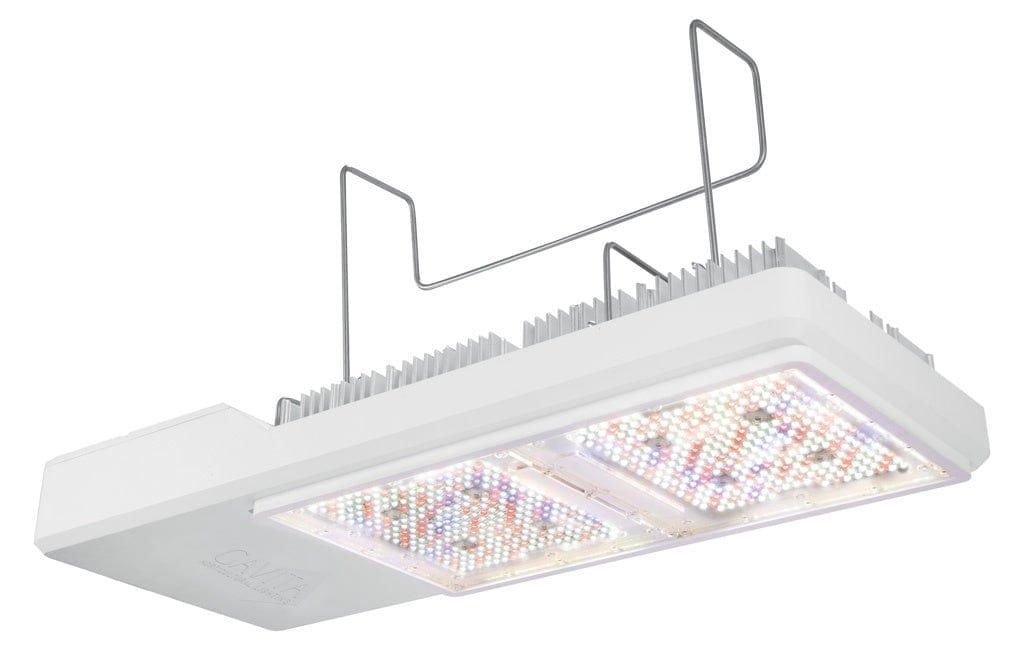
This article analyzes why the Gavita CT 2000e LED Grow Light 780w (and similar high-tier luminaires available through retailers like Lumimuse) has become the standard for commercial facilities aiming to secure a solvent ROI.
II. The Physics of Efficiency: Photon Efficacy & OpEx
To understand the economic advantage of high-end lighting, we must move beyond "Watts" and focus on Micromoles (μmol).
In a vertical farm, a "Watt" is simply a measure of what you pay the utility company. It tells you nothing about plant growth. Photon Efficacy (μmol/J) tells you how efficiently a fixture converts that electricity into Photosynthetic Photon Flux Density (PPFD)—the actual light plants "eat."

The Gavita CT 2000e draws 780 watts but delivers an output of 2000 μmol/s.
- The Math: This translates to an efficacy of ~2.6 μmol/J.
- The Comparison: A traditional 1000W Double-Ended (DE) HPS fixture draws ~1060 watts (including ballast inefficiencies) to produce similar light output.
- The Result: You save ~25% on electricity instantly, just by plugging it in.
Across a facility running 500 lights for 12 hours a day, this differential amounts to hundreds of thousands of dollars in annual OpEx savings.
Definition Box: The Language of Light
- PPFD (Intensity): The amount of light hitting a specific spot on the canopy each second. Think of this as "rainfall intensity."
- DLI (Daily Light Integral): The total amount of light a plant receives over 24 hours. Think of this as the "total rain accumulation" for the day. High-end lights allow you to hit target DLI in fewer hours, further reducing energy costs.
III. Thermal Management: The Hidden "HVAC Tax"
The most overlooked cost in vertical farming is the relationship between lighting inefficiency and cooling loads. This is the "HVAC Tax."
Radiant vs. Convection Heat
Inefficient lights (like HPS or budget LEDs) emit massive amounts of radiant heat (Infrared). This heat shoots directly into the leaf surface, spiking leaf tissue temperature (LST). To compensate, facility managers must blast air conditioning to cool the canopy, doubling their energy spend.

High-end fixtures like the CT 2000e are designed to run cool.
- Lower Thermal Load: Because they convert more energy into light, they convert less into heat.
- Passive Dissipation: The sleek, finned body of the CT 2000e acts as a giant heatsink, dissipating heat via convection (heat rising away from plants) rather than radiation.
- HVAC Savings: For every watt of lighting saved, you typically save ~0.3-0.5 watts in cooling load.
Commercial Comparison: The HVAC Impact
| Feature | Gavita CT 2000e LED | 1000W DE HPS Fixture | Generic "Budget" LED |
|---|---|---|---|
| Input Power | 780W | ~1060W | 800W |
| Light Output | 2000 μmol/s | ~2100 μmol/s | ~1600 μmol/s |
| Photon Efficacy | ~2.6 μmol/J | ~1.7-1.9 μmol/J | ~2.0 μmol/J |
| Radiant Heat | Low (Convective) | High (Infrared) | Moderate |
| HVAC Load | Low | Extreme | High |
| Replacement Cycle | >50,000 hrs (L90) | 10,000 hrs (Bulb) | 20,000 hrs (Driver Fail) |
| Retrofit Speed | 1:1 Plug & Play | N/A | Rewiring Required |
Analyst Note: The Gavita CT 2000e is the industry's first true 1:1 HPS replacement. It fits into existing HPS layouts (Unistrut/C-profile), meaning you don’t need to redesign your facility’s grid to upgrade.
IV. Spectral Control and Crop Morphology
In vertical farming, space is money. You cannot afford plants that "stretch" and hit the lights above them. This is where Spectral Distribution becomes a morphology tool.
📺 Related Video: Gavita CT 2000e LED Grow Light 780w [Action]
The Blue Light Advantage
The CT 2000e delivers a broad-spectrum white light with an enhanced blue region.
- Vegetative Steering: Blue wavelengths inhibit stem elongation (internodal stretching). This results in stockier, more compact plants—perfect for multi-tier racks where headroom is limited.
- Quality: Blue light is proven to drive secondary metabolite production (terpenes, cannabinoids, and flavonoids), enhancing the flavor profile of leafy greens and herbs.
Uniformity is King
A common failure in vertical farms is "hot spots"—areas where light intensity burns the crop, while edges starve. The CT 2000e utilizes wide-optic technology to spread light evenly. Homogeneity ensures that the lettuce on the edge of the tray grows at the exact same rate as the lettuce in the center. This uniformity allows for predictable harvest windows, a requirement for supplying grocery chains.
For more on optimizing light setups for specific crops, refer to the LED Grow Lights Guide.
V. Information Gain: The "Fixture Lifespan" Fallacy
Many budget manufacturers tout "50,000 hour lifespans." However, they often reference L70 standards—meaning the light will degrade to 70% brightness after 50k hours.
In a vertical farm, 70% light output is a crop failure.
High-end fixtures like the Gavita CT 2000e are engineered to L90 standards. They maintain >90% of their initial output for tens of thousands of hours.
- Labor Cost: Replacing cheap fixtures (or HPS bulbs every 9 months) requires scissor lifts, labor hours, and facility downtime.
- IP Ratings: Vertical farms are humid, transpiration-heavy environments. The CT 2000e is IP66 rated, meaning it is dust-tight and protected against powerful water jets. You can wash your room down without fear of electrical failure—a critical feature for maintaining GMP (Good Manufacturing Practice) hygiene standards.
Note: For specialized UV supplementation to further enhance crop quality, growers often pair these toplights with the Solacure UVB Grow Light.
VI. Trends 2026: Smart Integration & The Future
The future of CEA lighting is "Connected." 2026 trends indicate a massive shift toward Smart Lighting Integration.

The CT 2000e is not just a bulb; it is a data point. When connected to a Master Controller (like the Lumimuse EL1/EL2), it unlocks:
- Sunrise/Sunset Simulation: Slowly ramping up light mimics nature, preventing "light shock" and reducing condensation on plants.
- High-Temp Dimming: If your HVAC fails and the room hits 85°F, the lights automatically dim to save the crop.
- Eco-System Mixing: You can mix the CT 2000e with other e-series fixtures on the same controller, allowing for hybrid lighting layouts without complex wiring.
VII. Conclusion
In the vertical farming sector, "cheap" lighting is the most expensive mistake you can make. The initial CapEx savings of budget LEDs are quickly eroded by higher HVAC loads, inconsistent yields, and rapid fixture degradation.
The Gavita CT 2000e represents the maturity of the market: a fixture that respects the physics of efficiency, the biology of plant morphology, and the economics of facility management. By replacing 1000W HPS systems with this 780W powerhouse, you aren't just buying a light; you are upgrading your facility's entire thermal and financial profile.
Ready to calculate your OpEx savings?
To secure high-end fixtures like the CT 2000e—often found on clearance for savvy facility managers—check the current stock at specialized retailers like Lumimuse and start optimizing your canopy for vertical farming lighting today.