The smart home has a dirty secret: it is often harder to use than a "dumb" home.
For decades, the promise of home automation was convenience. Yet, in 2025, many users find themselves unlocking a smartphone, finding an app, waiting for it to load, and tapping three times just to turn on a kitchen light. This is the Smart Home Paradox—replacing a 200-millisecond physical switch interaction with a 15-second digital process.
The future of lighting control trends isn't about better apps or louder voice assistants. It is about Zero-UI (User Interface).
What is the future of lighting control?
The future of lighting control trends is moving away from manual triggers (Apps and Voice) toward Ambient Computing and Context-Aware Automation. By utilizing mmWave radar presence detection and AI-driven behavior prediction, lighting systems are evolving to function autonomously without requiring direct user commands.
This guide benchmarks the three dominant control interfaces—Voice, App, and Motion—and reveals why the industry is pivoting toward an interface-free future powered by Human-Centric Lighting and predictive AI.
I. The Current State: Benchmarking Control Interfaces
To understand where the industry is heading in 2026, we must first analyze the friction points of current technology. Most smart homes today rely on a "Command-Response" model, where the user must explicitly tell the house what to do.
The Friction of Apps (High Latency)
Apps are excellent for Configuration (setting up scenes, schedules, and colors) but terrible for Execution. The cognitive load required to navigate a UI destroys the "magic" of a smart home.
- Attribute: UX Efficiency
- Verdict: Failed for daily use.
The Latency of Voice (Cloud Dependence)
Voice assistants (Alexa, Google Assistant, Siri) solved the "hands-free" problem but introduced Latency and Privacy concerns. Sending a command to the cloud and back takes 1–3 seconds—an eternity compared to a hardwired switch. Furthermore, voice lacks "conversational nuance"; shouting commands at night disrupts the household.
- Attribute: Response Time
- Verdict: Useful for exceptions, annoying for routine.
The Limitations of PIR Motion (The "Static" Problem)
Passive Infrared (PIR) sensors have been the standard for decades. They detect changes in heat signatures.
- The Flaw: If you sit still to read a book or watch TV, the heat signature stops moving. The sensor assumes the room is empty and plunges you into darkness. This is known as the "Waving Man Syndrome"—where users frantically wave their arms to re-trigger the lights.
📺 Related Video: PIR sensor vs mmWave radar smart home comparison
Comparison Matrix: The Control Hierarchy
| Interface Type | Latency (Speed) | Context Awareness | Privacy | Best Use Case |
|---|---|---|---|---|
| Physical Switch | Instant (<50ms) | None | 100% Local | Muscle memory / Guests |
| Mobile App | Slow (5-15s) | Low | Cloud-Dependent | Setup & Complex Scenes |
| Voice Control | Medium (1-3s) | Medium | Low (Cloud) | Exceptions ("Turn all off") |
| PIR Motion | Fast (<200ms) | Low | High (Local) | Hallways / Transitory Areas |
| mmWave Radar | Fast (<200ms) | High (Micro-motion) | High (Local) | Living Rooms / Offices |
II. The Evolution: From "Command" to "Context"
The shift for 2026 is moving from detecting motion to detecting presence. This distinction is critical for Information Gain in modern smart home design.

The Shift to mmWave Radar
Unlike PIR, which waits for heat to move, Millimeter Wave (mmWave) radar emits active radio waves that bounce off objects.
- Micro-Movement Detection: mmWave is sensitive enough to detect the rise and fall of a human chest (breathing) or the beating of a heart. It knows you are in the room even if you are completely stationary.
- Through-Wall Sensing: Higher frequency waves can penetrate drywall, allowing for "hidden" sensors that maintain aesthetics.
Local Control vs. Cloud Dependence
As we move toward Matter and Thread protocols, the processing of these signals is shifting from the cloud to the edge (Local).
- Why it matters: If your internet goes down, your lights should still work. Local processing ensures that the latency between detecting presence and activating a scene is virtually zero.
Circadian Rhythm Integration
Human-Centric Lighting is the "Attribute Entity" linking biology to technology. Modern controllers do not just toggle power; they adjust Color Temperature (Kelvin) based on the time of day.
- Morning: High Kelvin (Blue-white) to suppress melatonin and wake you up.
- Evening: Low Kelvin (Amber/Red) to encourage sleep.
- Automation: This happens without user input, purely based on the solar cycle.
III. The "Zero-UI" Future: AI as the Ultimate Controller
The "Zero-UI" concept argues that the best controller is no controller at all. The house should simply know what you want.
Predictive Lighting & Generative AI
By 2026, home hubs are integrating Generative AI models to analyze behavioral patterns.
- Scenario: The system observes that every weekday at 6:00 AM, you walk to the kitchen and turn the lights to 50%.
- Prediction: After two weeks, the AI builds an automation: If Time = 6:00 AM AND Presence Detected in Kitchen, THEN Set Lights to 50%.
- Result: You walk in, and the lights are already perfect. You touched nothing.
The Hierarchy of Future Lighting Controls
- Predictive AI (Top): Anticipates needs before they happen.
- Presence Automation (mmWave): Reacts to immediate physical presence.
- Voice (Fallback): Used only to override the AI (e.g., "It's movie night").
- Physical Switch (Backup): For guests or internet outages.
- App (Setup only): strictly for configuration.
The Role of the "Mission Control" Panel
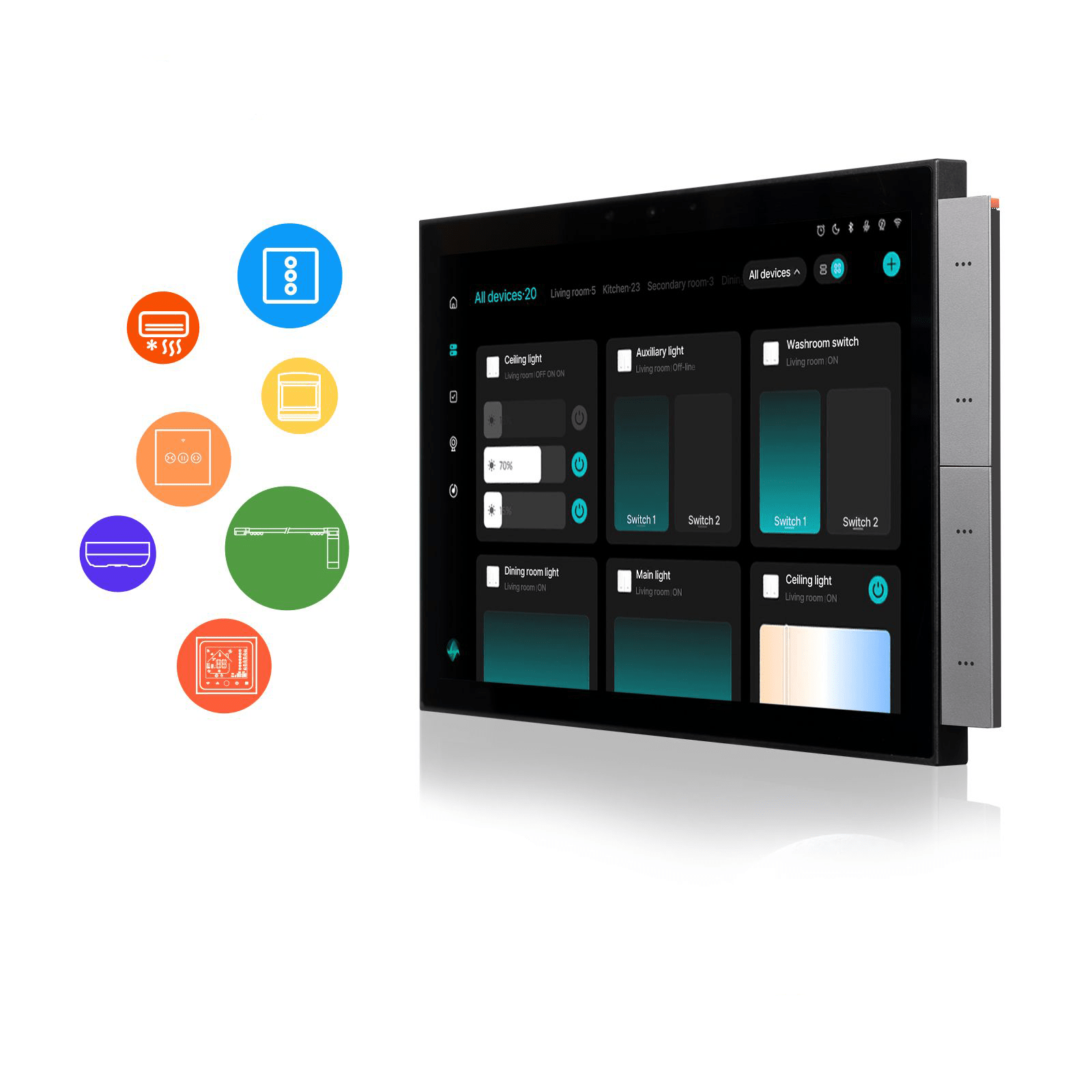
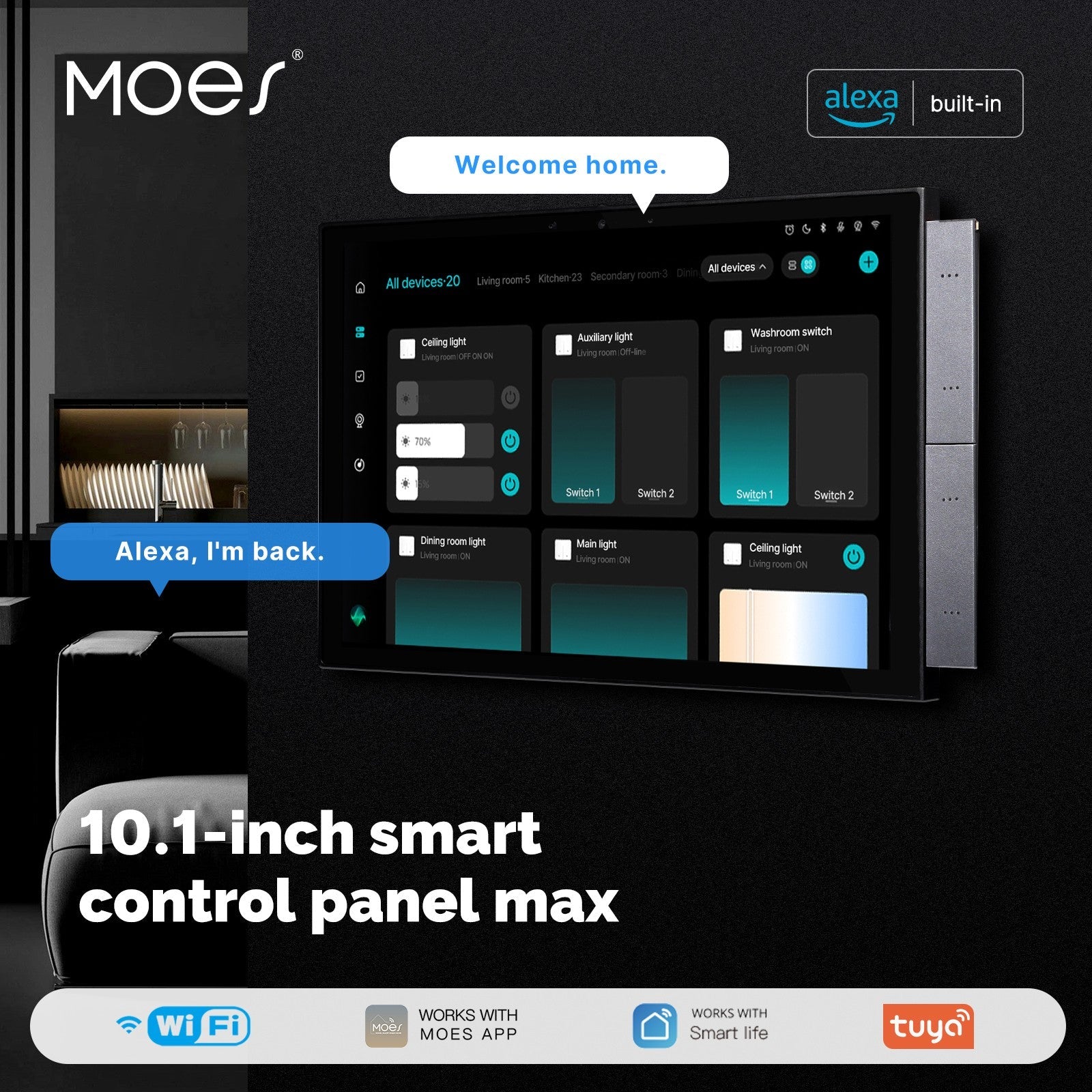
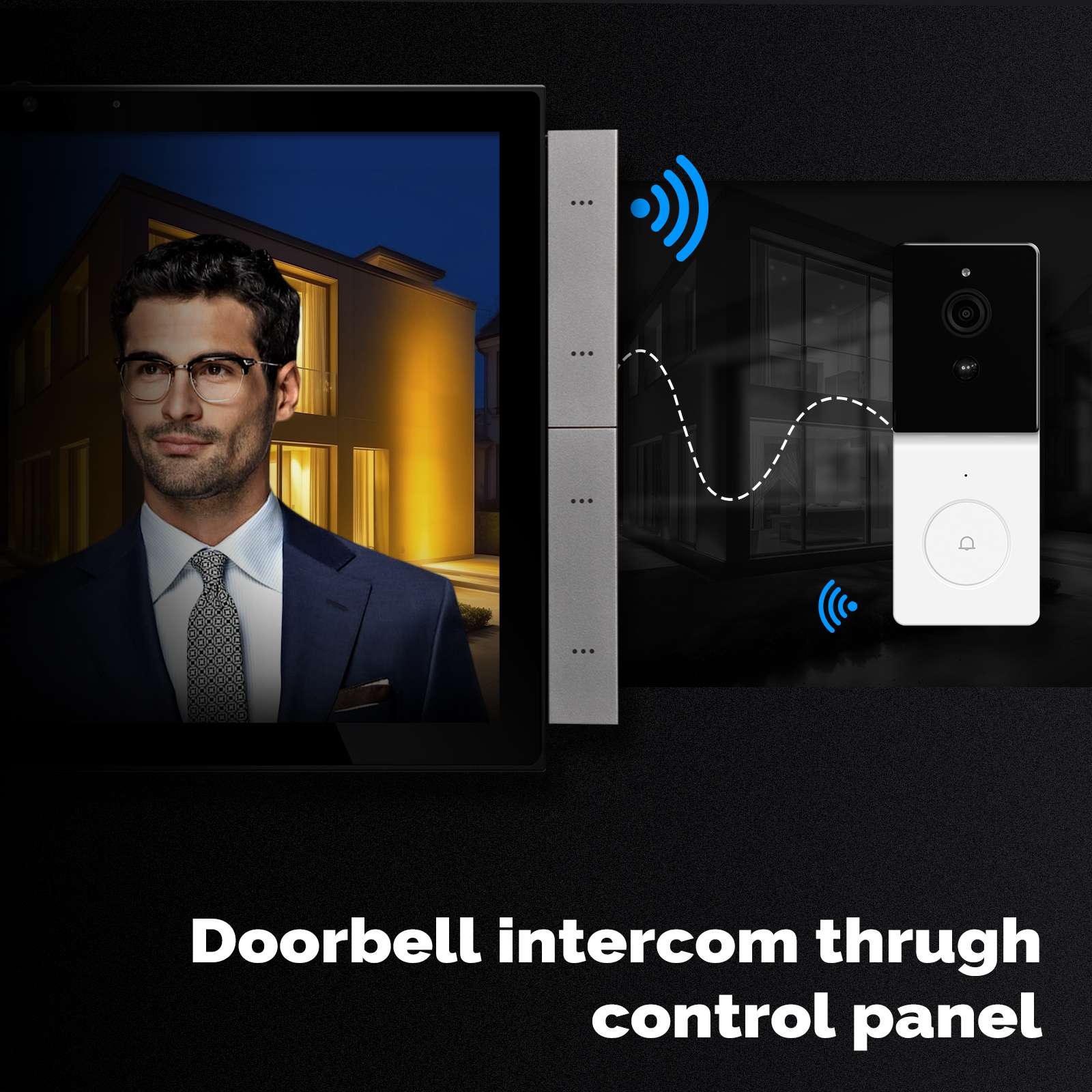
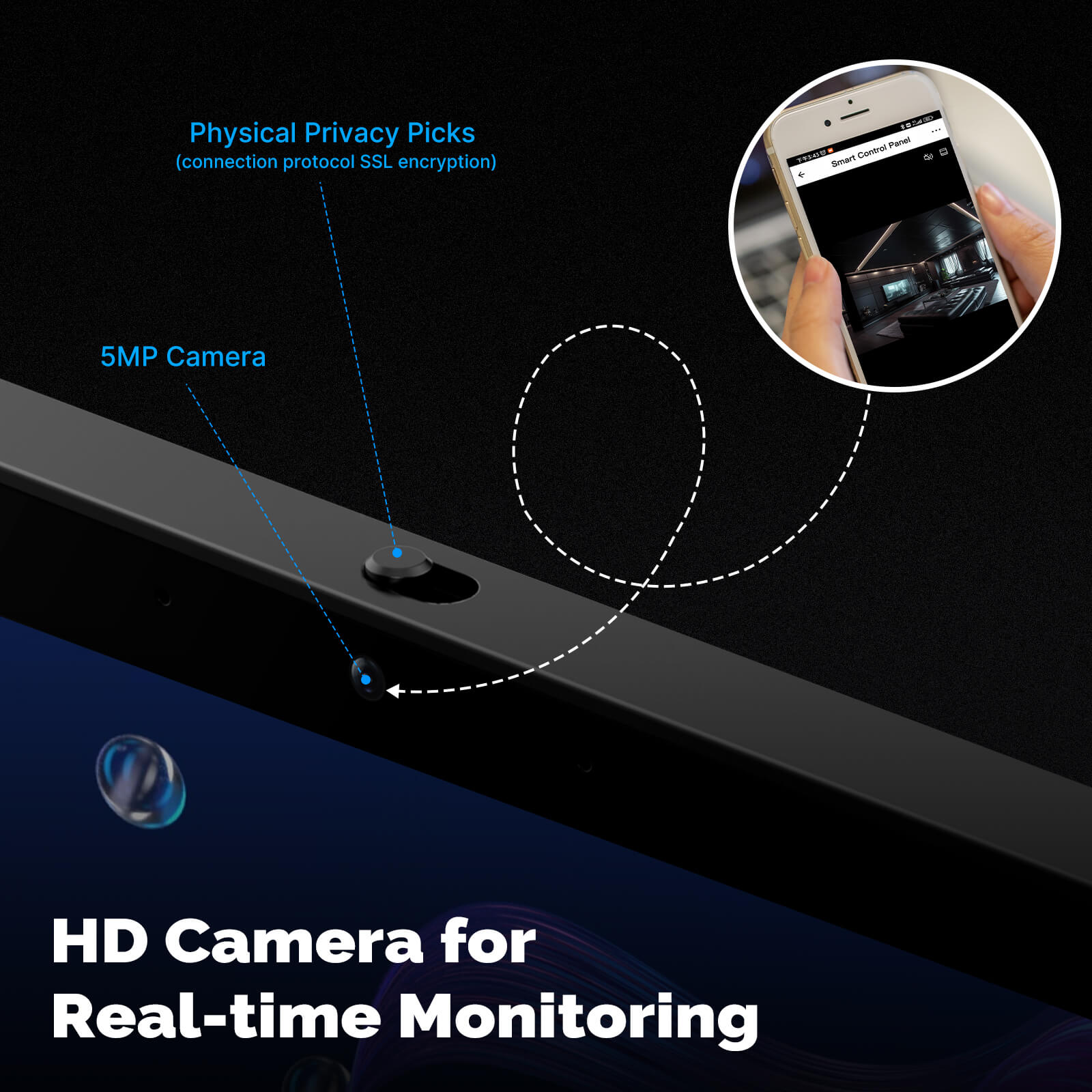
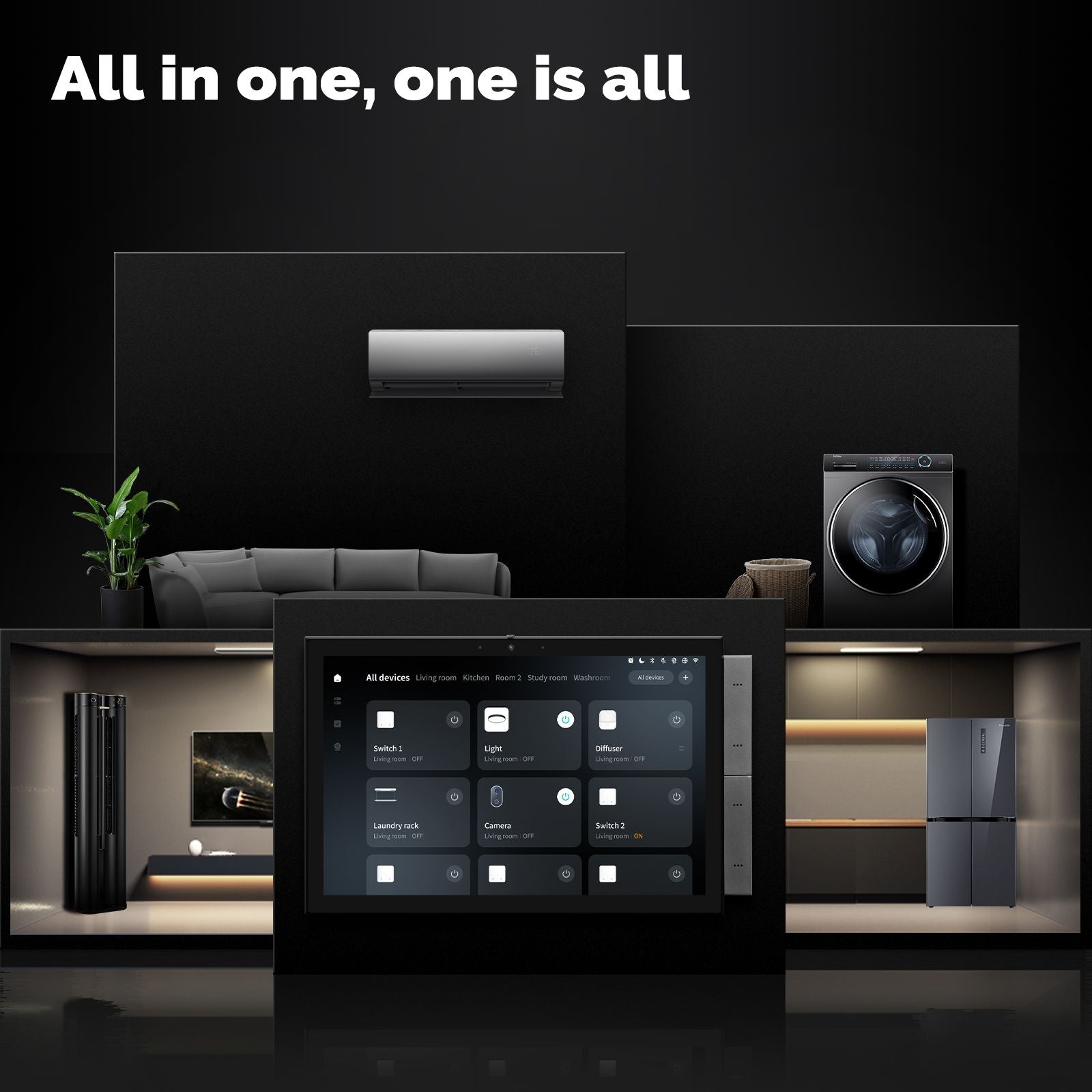
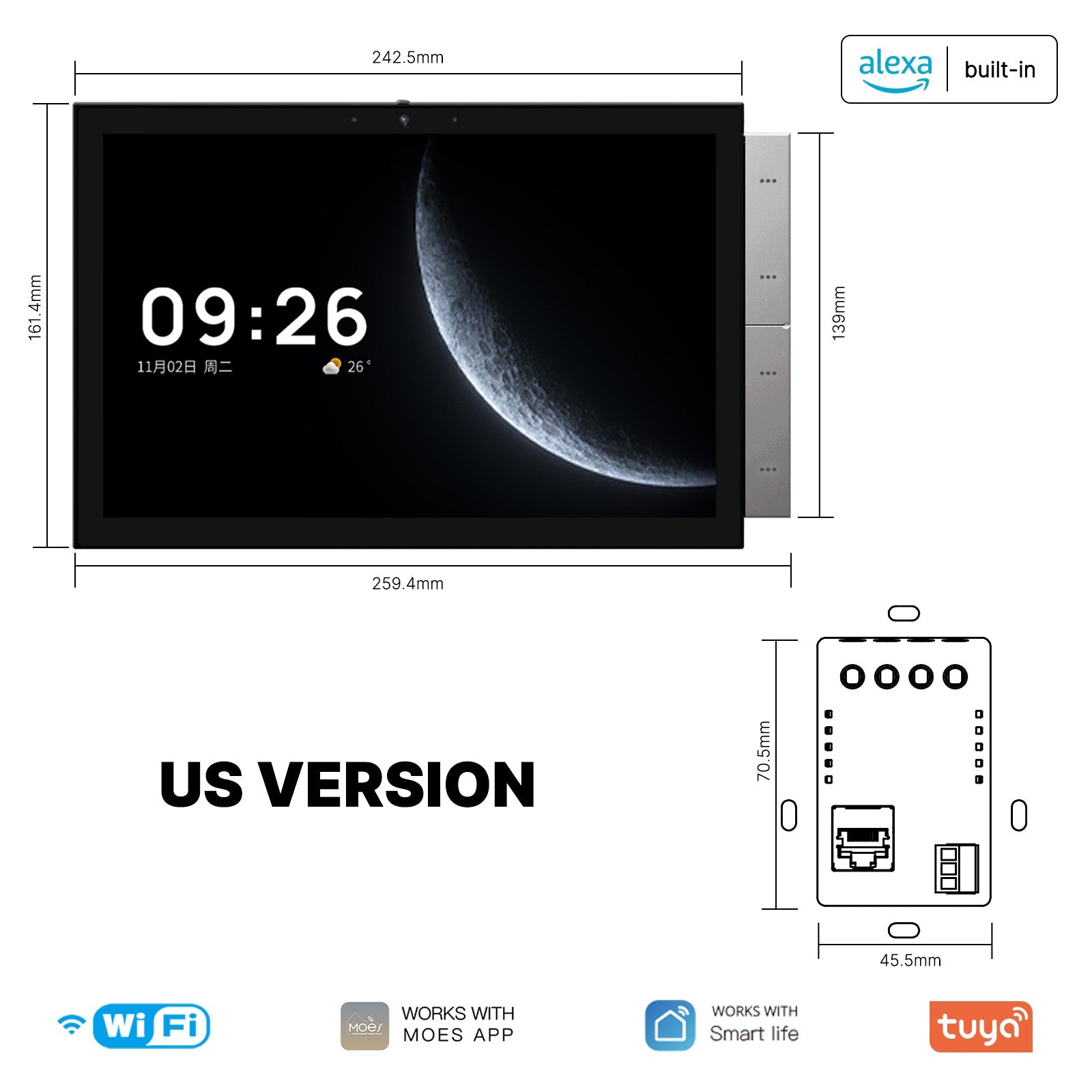
While "Zero-UI" is the goal, users still need a central hub for system oversight and intercom communication. This is where dedicated hardware like the Tuya 10.1-Inch Smart Control Panel Max with Ble/Zigbee Gateway bridges the gap.

- It serves as a Multi-Mode Gateway (Zigbee/Bluetooth), processing the local signals from sensors.
- It solves the Interoperability friction by centralizing control.
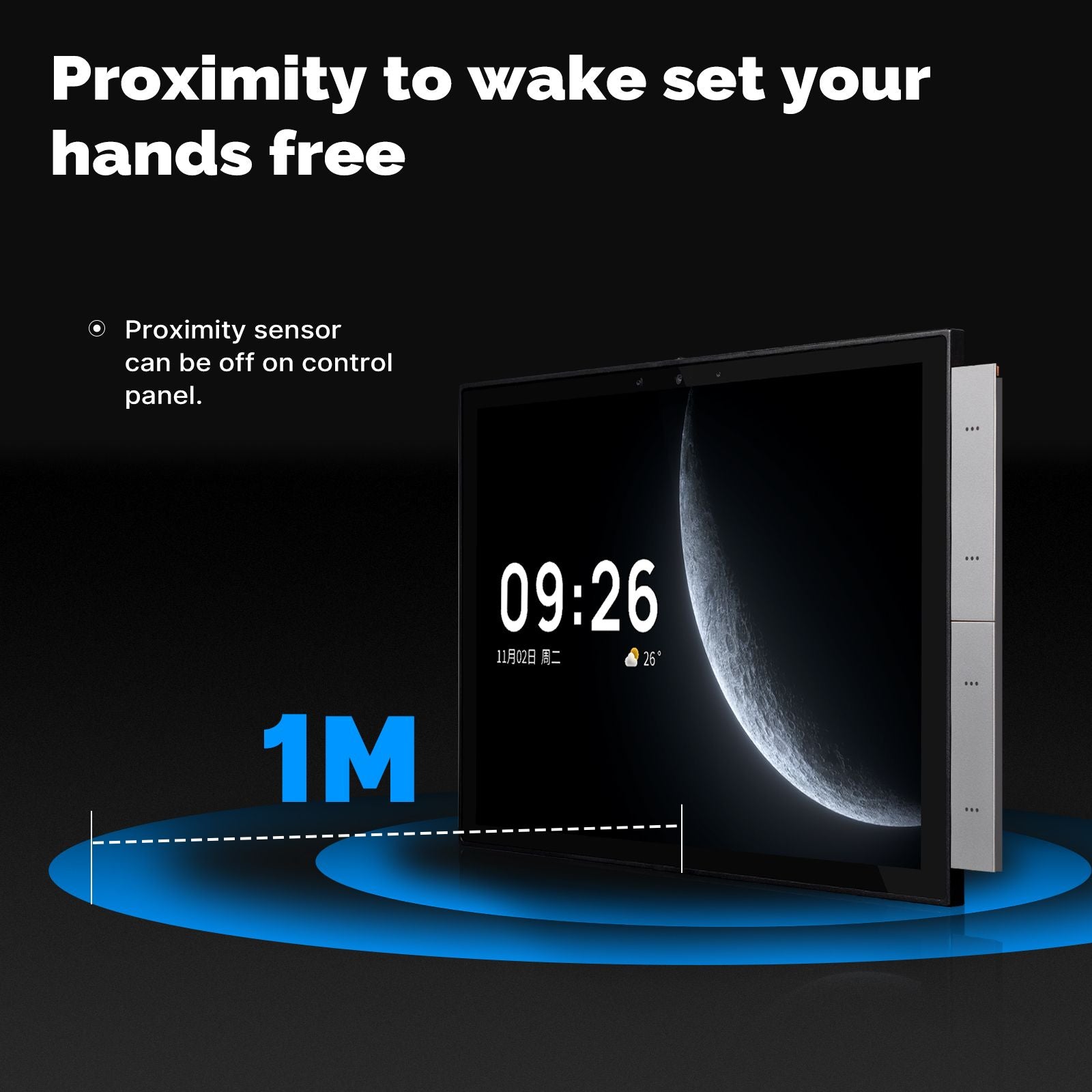
- It features Proximity Wake, meaning the screen activates only when you approach—a physical manifestation of the Zero-UI philosophy.
IV. Lighting Control Trends: Protocol Infrastructure
The "pipes" connecting these devices are just as important as the devices themselves.

The Impact of Matter & Thread
The Matter Protocol effectively kills the "walled garden" approach. In 2026, a lighting sensor from one brand must talk to a bulb from another.
- Thread: A low-power mesh network that heals itself. If one bulb fails, the signal routes around it. This is crucial for Latency and reliability.
Retrofittable Tech vs. Smart Bulbs
A growing trend is the use of Smart Relays installed behind "dumb" wall switches. This allows users to keep their high-end designer switches while adding Scene Orchestration capabilities to the circuit. It solves the issue where turning off a smart bulb at the switch kills its brain.
V. Conclusion
The trajectory of lighting control trends is clear: we are moving from Active Input (flipping switches) to Passive Sensing (Ambient Computing).
- The App is becoming a dashboard for setup, not a remote control.
- Voice is becoming a specific tool for specific overrides.
- Motion is evolving into Presence via mmWave radar.
The ultimate luxury in a smart home is invisibility. The technology should be so good that you forget it is there. Whether you are using advanced mmWave sensors or a central hub like the Tuya Control Panel to manage your Zigbee mesh, the goal is the same: light that appears exactly when you need it, and vanishes when you don't.
What Users Say (UGC Insights)
"I swapped my PIR sensors for mmWave in the living room, and it changed everything. No more waving my arms to turn the lights back on while watching a movie. It just works." — HomeAutomation Subreddit User
"The lag on my voice assistant was driving me crazy. Moving to a local Zigbee gateway dropped the response time to instant. I'll never go back to WiFi bulbs." — Verified Tech Reviewer
Ready to banish the light switch? Explore our deep dive on Emerging Trends in Smart Lighting or learn the basics in What Are Smart Lights.