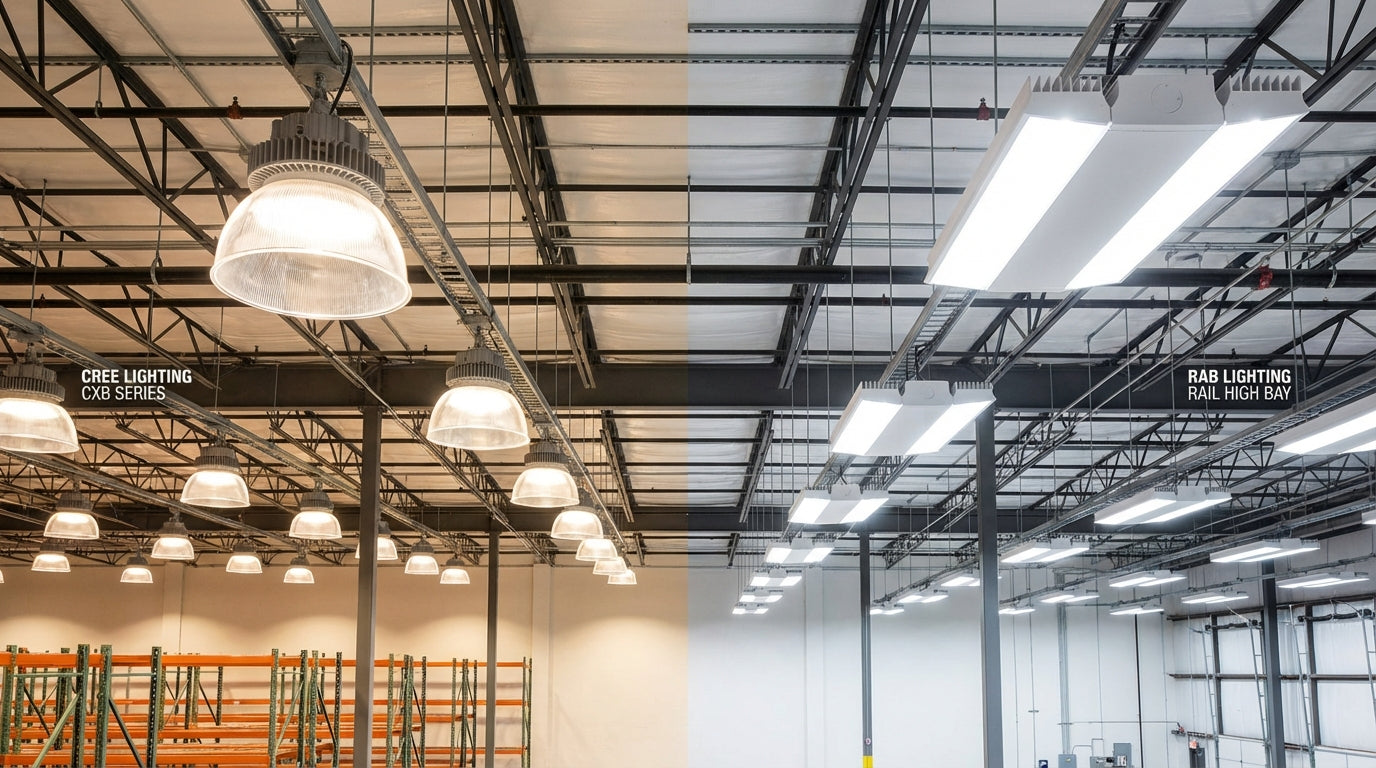
Quick Verdict: In the Cree vs. RAB lighting comparison, Cree Lighting (now under ADLT) is the definitive choice for "specification-grade" projects requiring extreme longevity (100k+ hours) and high heat tolerance (50°C+). RAB Lighting remains the contractor’s favorite for speed, offering "off-the-shelf" availability and easier installation for light industrial retrofits.
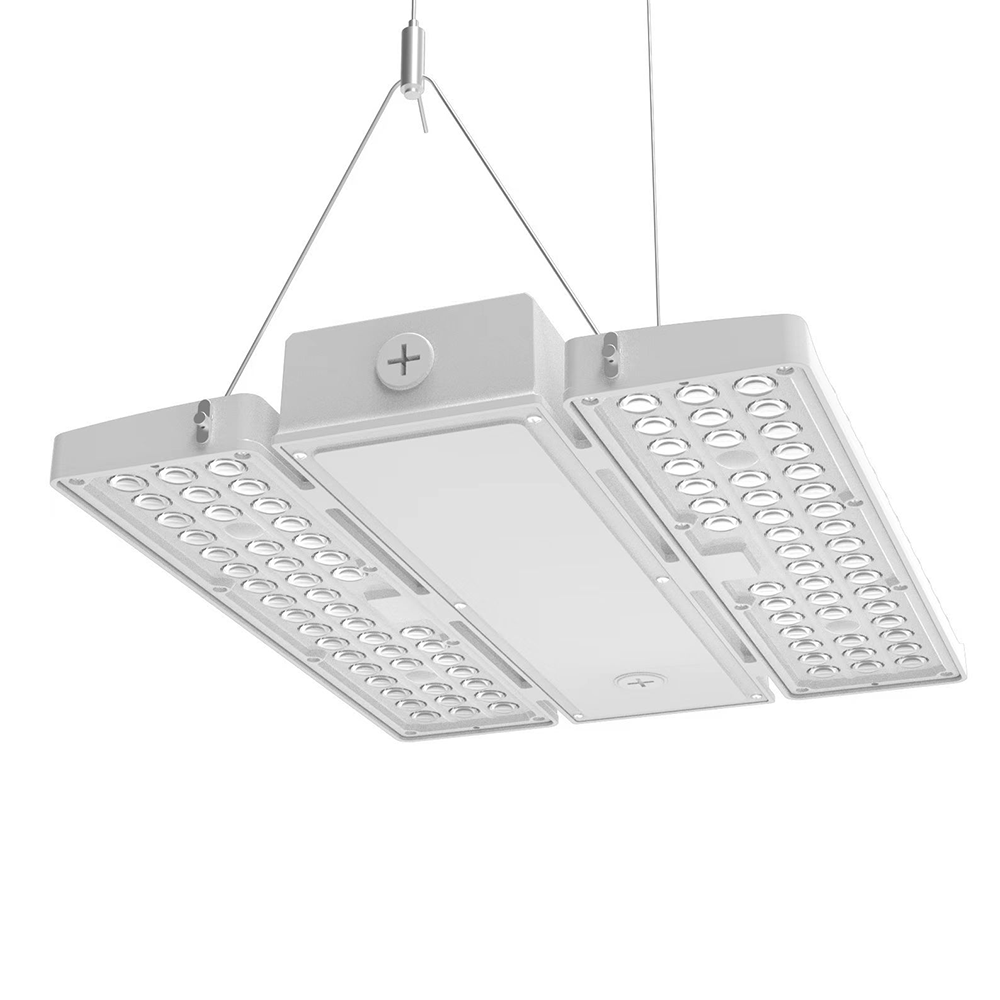
For facility managers who need the durability of Cree but the versatility of a stock fixture, the PAVO III LED High Bay serves as a powerful "hybrid" solution, offering selectable wattage and high-output performance without the 4-week factory lead time.
I. Introduction
The electrician’s nightmare isn’t the installation; it’s the callback.
Saving $20 on a fixture upfront evaporates the moment you have to rent a scissor lift two years later to replace a failed driver. In the industrial sector—warehouses, foundries, and manufacturing plants—lighting isn't just about lumens; it’s about Callback Risk Management.
When bidding a commercial job, the debate often lands on two heavyweights: Cree Lighting and RAB Lighting.
- Cree Lighting: The engineer’s choice. Known for Wolfspeed roots, semiconductor heritage, and over-engineered thermal management.
- RAB Lighting: The distributor’s darling. Known for the "No Compromise" warranty, stock availability, and installation-friendly design.
This guide moves beyond the brochure specs to compare these brands on heat dissipation, driver reliability, and supply chain reality for 2026.
II. Thermal Management & Housing Construction
Heat is the silent killer of LED drivers. In industrial ceilings, temperatures can rise 20°F hotter than the floor. A fixture’s ability to shed this heat determines if it lasts 10 years or 10 months. You can read more about the challenges of commercial spaces in our guide to LED High Bay Lighting.
Cree Lighting: The Flow-Through King
Cree’s industrial lines (like the KBL and IG Series) are famous for their open-frame designs. By isolating the driver from the LED array and allowing vertical airflow (convection) through the fixture, they drastically reduce the junction temperature.
- Housing: Often utilizes low-copper die-cast aluminum with specialized coatings for corrosion resistance.
- Benefit: Superior reliability in "dirty" power environments and high-heat foundries (50°C+ ratings).
RAB Lighting: The Sealed Approach
RAB typically uses traditional die-cast housings with substantial heat sinking fins. While effective for general warehousing, some "economy" lines (like the basic RAIL series) rely on sealed compartments that can trap heat if the ambient temperature spikes.
- Housing: Robust polycarbonate and aluminum, heavy on impact ratings.
- Benefit: Excellent physical protection (IK ratings) against forklifts or debris, but potentially hotter running drivers in unconditioned spaces.
The Hybrid Alternative: PAVO III
For projects needing a balance, the PAVO III LED Linear High Bay utilizes a compact, sturdy housing designed for passive cooling. With a wattage-selectable switch (210W/180W/155W), you can lower the drive current on-site, effectively running the fixture cooler and extending its lifespan—a feature fixed-wattage fixtures lack.


| Feature | Cree Lighting (KBL) | RAB Lighting (BayLED) | PAVO III Linear |
|---|---|---|---|
| Heat Dissipation | Flow-through (Convection) | Die-Cast Fins (Conduction) | Compact Passive |
| Max Ambient Temp | 50°C (122°F) | 40°C - 50°C (Varies) | 50°C (Standard) |
| Wattage Flex | Fixed (Usually) | Fixed (Usually) | Selectable (3-Step) |
| Lumen Maintenance | L70 > 100,000 hrs | L70 > 100,000 hrs | L70 > 50,000+ hrs |
III. Driver Reliability and Surge Protection
LED chips rarely fail; drivers do. This component converts AC line voltage to DC, and it takes the brunt of dirty power, surges, and heat.
The "Spec-Grade" difference
- Cree Lighting typically engineers its drivers with 6kV standard surge protection (often upgradable to 10kV). This is critical in facilities with heavy motor loads (conveyor belts, HVAC, stamping machines) that send spikes back into the grid.
- RAB Lighting has improved significantly, but their entry-level high bays often stick to 2.5kV or 4kV protection. While sufficient for retail, this can lead to premature failure in heavy manufacturing.
Industry Note: In late 2023, Cree Lighting was acquired by ADLT (Advanced Lighting Technologies). While this shifted ownership from Ideal Industries, the core engineering teams in Racine, Wisconsin, largely remained, maintaining the "spec-grade" driver quality.
The Call-Back Reality
Users on forums like ElectricianTalk and Reddit often note a "strobing" issue with certain RAB batches after 2–3 years. This is a classic symptom of capacitor drying in the driver. Cree drivers, while more expensive, are statistically less likely to suffer this drift, justifying their premium for hard-to-reach installations.
IV. The "Knuckle-Buster" Test: Ease of Installation
This is where RAB wins hearts and minds.
📺 Related Video: Cree KBL vs RAB BayLED installation comparison
RAB: Built for the Installer
RAB became a powerhouse because they listened to electricians.
- Pros: Hinged wiring boxes, quick-connect WAGO nuts included, and oversized knockouts.
- Cons: Some fixtures are heavy and bulky, making one-man installs on a lift difficult.
- Availability: You can get a RAB fixture at almost any City Electric or Graybar today.
Cree: Built for the Engineer
Cree fixtures are precise but can be fiddly.
- Pros: Modular light bars, lighter weight (due to open designs).
- Cons: Often require specific mounting brackets sold separately.
- Availability: Often a 2–4 week factory lead time. If you miscount and need one more, you wait.
The Middle Ground
The PAVO III is designed to replace 600W Metal Halide systems instantly. Its compact form factor makes it easier to handle on a scissor lift than the bulky round high bays, and the field-selectable brightness means you don't have to return a fixture if the customer decides it's "too bright" or "too dim" after install.
V. Warranty Terms: The Fine Print
A "10-Year Warranty" is useless if it doesn't cover the $500 lift rental.

-
RAB's "No Compromise" Warranty:
- Terms: Typically 5 years. Covers light output, color stability, and driver failure.
- The Catch: Generally covers parts only. RAB is known for shipping a replacement fixture quickly, but they rarely pay for the labor to swap it unless negotiated upfront on massive projects.
-
Cree Lighting's Warranty:
- Terms: Standard 5-year, with 10-year options on premium lines (KBL).
- The Catch: Labor allowances are strictly defined and usually require the fixture to be registered as a "SmartCast" or premium project.
Advice: Always verify if the warranty is "Day 1" or "Pro-rated." Both brands generally offer Day 1 coverage, but budget brands often pro-rate credit after Year 2.
VI. Conclusion
The choice between Cree and RAB comes down to the Cost of Failure vs. the Speed of Project.
Choose Cree Lighting if:
- The ceilings are 40ft+ and renting a lift is a logistical nightmare.
- The environment is hot (foundries, unconditioned mills).
- You are specifying for a "Grade A" facility where budget allows for 10-year longevity.
Choose RAB Lighting if:
- You need the fixtures tomorrow.
- The budget is tight, and it's a standard warehouse application.
- You want an easy, frustration-free installation experience.
Choose the PAVO III (Konlite) if:
- You need Information Gain on the job site: The ability to adjust wattage (210W/180W/155W) and brightness instantly without swapping fixtures.
- You want a high-efficiency replacement for 600W HIDs that balances durability with cost-effective availability.
Ready to spec your next industrial project?
Check out our guides on LED High Bay Lighting Applications or learn more about LED Technology Applications to ensure you pick the right color temperature and beam angle for your facility.